
Automatismos para centros de mecanizado CNC
Los automatismos para centros de mecanizado CNC son la respuesta más directa cuando una fábrica de madera o mueble necesita producir más sin multiplicar la intervención manual en planta. Si gestionas la producción de una empresa del sector y buscas reducir tiempos muertos, errores y dependencia de operarios en tareas repetitivas, estás en el lugar adecuado.
En KDT Ibérica ponemos a tu disposición una gama completa de automatización de centros de mecanizado, con soluciones adaptadas a distintos volúmenes de producción y configuraciones de planta.
What are machining centre drives?
Los automatismos para centros de mecanizado son sistemas diseñados para automatizar tareas repetitivas y optimizar el funcionamiento de máquinas CNC en procesos de fabricación. Su función principal es reducir la intervención humana, aumentar la precisión y mejorar los tiempos y procesos de producción.
Estos sistemas pueden controlar desde la carga y descarga de piezas hasta la programación de operaciones complejas. In the industrial sector, where efficiency and competitiveness are key, implementing automation allows companies to adapt to higher production demands without compromising quality.
Si quieres profundizar en el concepto antes de decidir, puedes consultar nuestra guía sobre qué son los automatismos para centros de mecanizado o explorar el catálogo completo de centros de mecanizado CNC para madera.

Benefits of implementing automation systems for machining centres
Applying automation in a machining centre brings direct benefits in terms of both productivity and profitability:
- Reduction of downtime: la automatización CNC de procesos elimina esperas entre tareas y optimizan el flujo de trabajo.
- Improved accuracy: al minimizar la intervención humana, se reduce el margen de error y se garantiza la repetibilidad de las operaciones.
- High performance: los automatismos permiten mantener una producción continua, incluso fuera del horario laboral.
- Reduction of operating costs: menor dependencia de operarios en tareas rutinarias y mejor aprovechamiento de los recursos disponibles.
- Increased security: se evitan errores humanos que podrían comprometer tanto la máquina como al personal.
Con automatismos CNC
- Carga y descarga sin paradas entre piezas
- Etiquetado integrado en línea, sin reprocesos
- Trazabilidad de datos en tiempo real
- Producción sostenida turno a turno
Sin automatismos
- Operario dedicado a cada punto del proceso
- Riesgo de error en identificación de piezas
- Pérdida de tiempo entre operaciones
- Capacidad productiva limitada al turno activo
Most common types of automatisms used in machining centres
5. Door operators
Systems designed to automate specific door manufacturing tasks such as stacking, transport or handling of doors, optimising production and reducing handling times.
6. Etiquetadoras automáticas
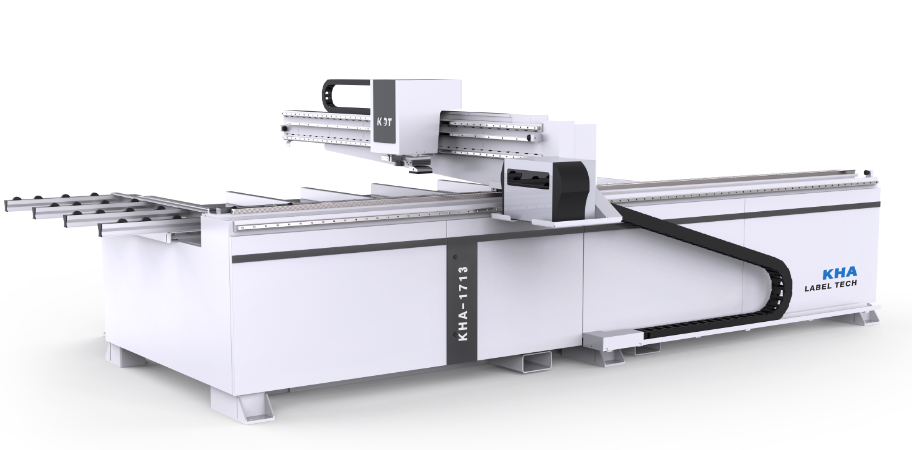
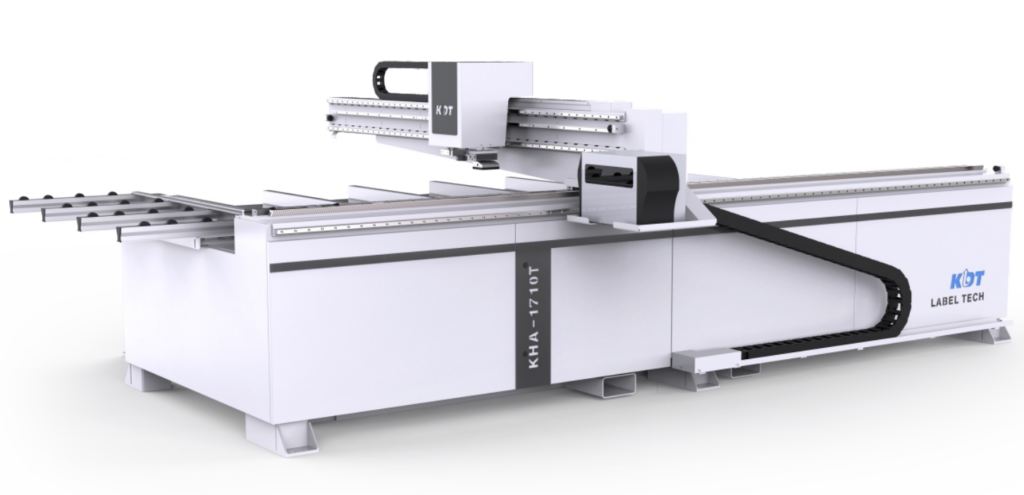
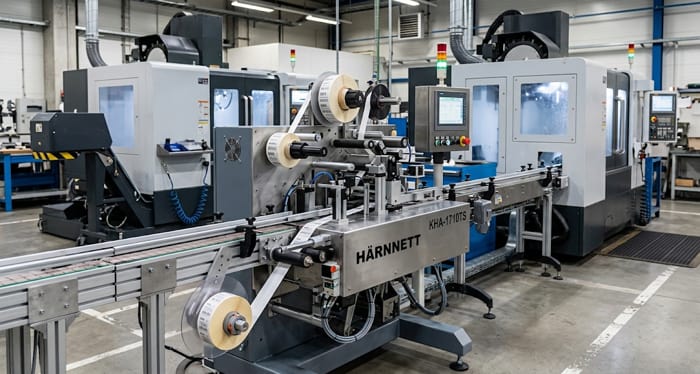
Las etiquetadoras automáticas resuelven uno de los cuellos de botella más habituales en planta: la identificación de piezas tras el mecanizado. Al integrarse en la línea, reciben los datos del programa de corte y etiquetan cada pieza de forma automática, eliminando errores de identificación y reprocesos posteriores.
Los modelos KHA-1710TS y KHA-1713TS de KDT se integran con el centro CNC y gestionan el etiquetado sin detener la producción. El sistema lee los datos de cada orden de trabajo y aplica la etiqueta en la posición correcta, lo que facilita el ensamblaje posterior y mejora el control de cada lote.
Depending on the type of work and the desired level of automated production, there are different automation solutions for machining centres:
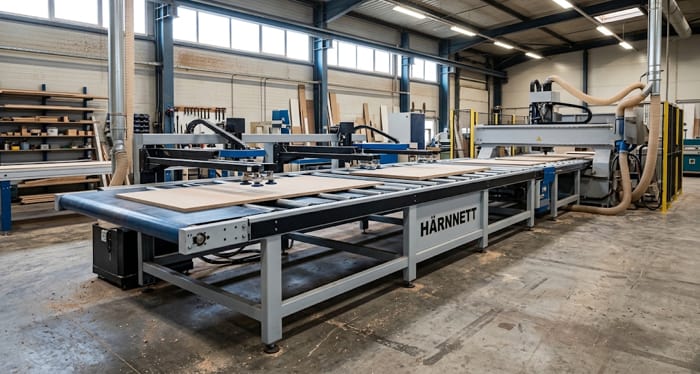
1. Automatic loading and unloading systems
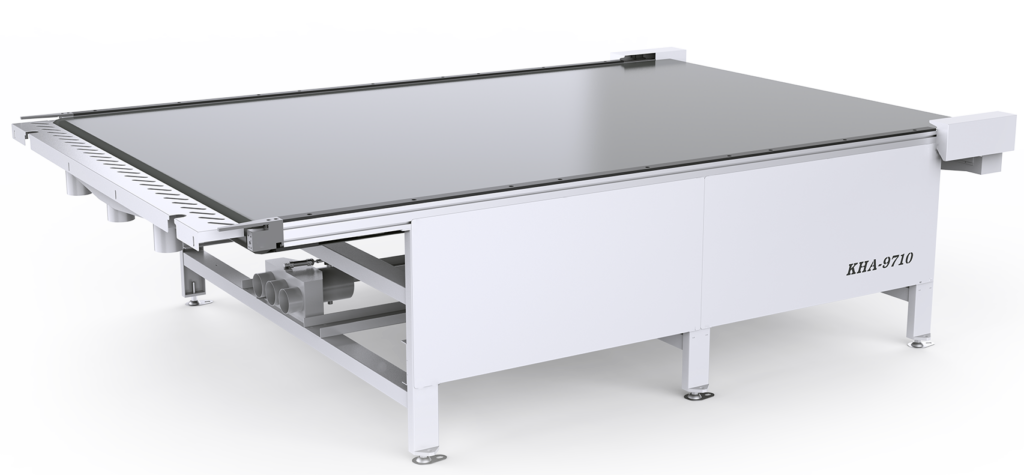
They use robotic arms or sliding tables to insert and remove parts from the machining centre without manual intervention. This type of automation is essential in continuous production lines or long series.
Las mesas de carga y descarga automática de KDT están pensadas para integrarse directamente con el centro CNC y eliminar los tiempos de espera entre piezas. Los modelos KHA-9710 y KHA-9713 cubren distintas necesidades de formato y volumen de producción, con una puesta en marcha sencilla y un sistema de transferencia que no interrumpe el ciclo de mecanizado.
2. Automatic Tool Changers (ATCs)
Allow the machining centre to select and use different tools during the same cycle, without stopping production. They increase efficiency on jobs with multiple operations.
3. Automated warehouses
They integrate intelligent towers or racks to store panels of different sizes, thicknesses and materials, automatically managing inventory and internal logistics.
4. Remote monitoring and control systems
They allow machine parameters to be monitored and adjusted remotely, in real time. They improve traceability and allow faster intervention in the event of faults or incidents.
When should a machining centre be automated?
Machine automation is not exclusive to large industrial plants. In fact, more and more SMEs in the metalworking and manufacturing sector are implementing automation options for machining to:
- Reduce dependence on skilled labour.
- Increase productivity without extending shifts.
- Optimise resources for repetitive series or complex processes.
If your company is looking to scale up production capacity, improve product quality or reduce operating costs, automation can be a strategic investment.
### ¿Qué factores tener en cuenta al elegir un automatismo CNC?
Antes de decidir qué sistema encaja mejor en tu planta, conviene valorar cuatro aspectos clave:
- Production volume: no todas las soluciones tienen el mismo retorno en series cortas y en producción continua. Define primero tu cadencia real.
- Compatibilidad con el centro de mecanizado: el automatismo debe integrarse con el protocolo de comunicación de tu máquina CNC actual. En KDT verificamos la compatibilidad antes de cualquier propuesta.
- Espacio disponible en planta: mesas de carga, buffers y apiladores requieren superficie y acceso para mantenimiento. Una visita técnica previa evita sorpresas en la instalación.
- Nivel de automatización deseado: desde una sola mesa de descarga hasta una línea completa con etiquetado y apilado integrado. El punto de partida lo marcas tú según el presupuesto y el objetivo de producción.
Investing in industrial automation for machining centres not only improves the efficiency of the production process, but also represents a clear competitive advantage in today's market that translates into greater profitability and precision.
Soluciones de automatización de centros de mecanizado en KDT Ibérica
En KDT Ibérica contamos con una gama de productos para la automatización de centros de mecanizado CNC adaptada a distintos perfiles de empresa: desde talleres que dan sus primeros pasos en la automatización hasta plantas con líneas de producción continua que necesitan integrar varios sistemas.
Lo que nos diferencia es la adaptación real a cada proyecto. No vendemos un catálogo cerrado: analizamos tu proceso, tu volumen de trabajo y tu espacio para proponer la solución que de verdad encaje.
Además, disponemos de showrooms donde puedes ver las máquinas en funcionamiento antes de tomar ninguna decisión, y de un servicio técnico propio (SAT) que garantiza la asistencia tras la instalación.
Are you considering automating your machining centre? Having a supplier specialised in machining machines will make a difference in the performance and durability of your systems. Take a look at all our options and contact us if you have any doubts.
Preguntas frecuentes sobre automatismos para centros de mecanizado
¿Cuánto cuesta un automatismo para un centro de mecanizado CNC?
El coste varía según el tipo de sistema, el modelo y el nivel de integración necesario. Una mesa de descarga automática tiene un coste muy diferente al de una línea completa con etiquetado y apilado. En KDT preparamos presupuestos personalizados según tu configuración actual y tus objetivos de producción.
¿Son compatibles con cualquier centro de mecanizado?
La mayoría de nuestros automatismos son compatibles con los principales fabricantes de centros CNC del mercado. Antes de cualquier propuesta, verificamos la compatibilidad técnica con tu máquina para garantizar una integración sin problemas.
¿Cómo es el proceso de instalación?
Nuestro equipo técnico se encarga de la instalación y la puesta en marcha en tu planta. El tiempo depende del sistema elegido, pero en la mayoría de los casos la interrupción de la producción es mínima. Te acompañamos también en la formación del personal que vaya a operar el sistema.
¿Qué mantenimiento requieren estos sistemas?
Los automatismos KDT están diseñados para un mantenimiento sencillo. Nuestro SAT propio ofrece asistencia técnica rápida, tanto de forma preventiva como ante cualquier incidencia, para que tu producción no se detenga.
¿Quieres ver cómo funcionan en tu sector antes de decidir? Request a quote o consulta nuestro catálogo completo y encuentra la solución que mejor se adapta a tu centro de mecanizado.
 Spanish
 Portuguese
 English