Choosing a beam saw cutting machine is not a minor decision. Behind that choice lies the efficiency of your production line, the quality of cut you will achieve day after day, and the real return on your investment.
At KDT Ibérica we have spent years supporting our clients with a specialised service for joinery workshops, furniture manufacturers and companies in the wood sector in Spain to find the beam saw that best suits their processes.
We do not sell generic machinery: we design solutions tailored to your production level, your materials and your needs with a high level of commitment.
What is a beam saw?
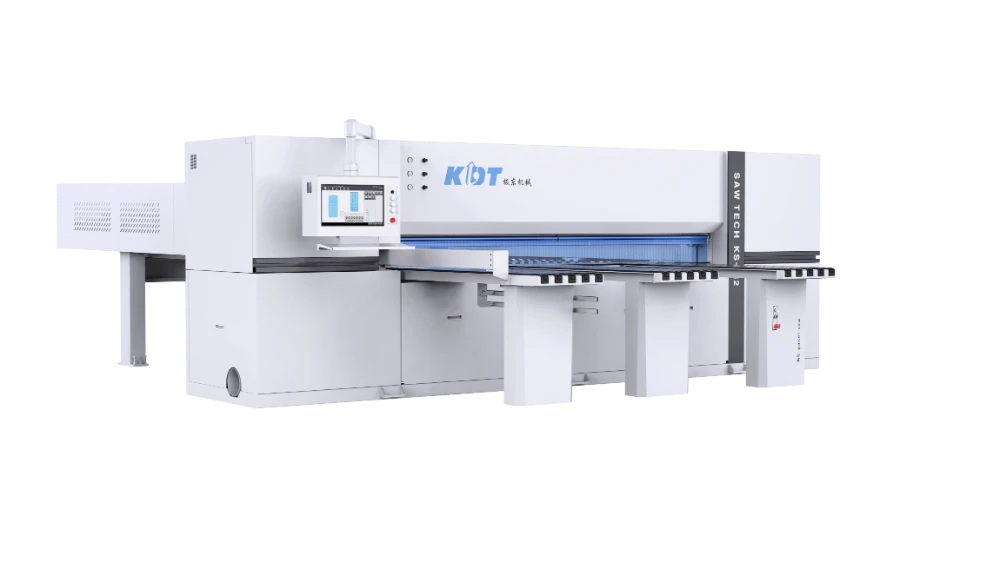
A beam saw is a machine designed to cut large-format panels into smaller pieces with high precision.
It is a fundamental tool in any furniture, panel or wood derivative manufacturing process.
What are beam saws used for?
The sectionalisers beam saws are a key piece of equipment in any workshop or factory working with wood-based panels. Their function goes far beyond cutting:
- They allow working with different materials such as MDF, chipboard, veneered board, solid wood or composite panels, adapting to different production needs.
- They perform longitudinal and cross cuts with high precision, reducing waste and achieving a high-quality finish on each piece.
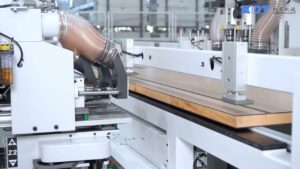
- They integrate key components such as the saw blade, pressure beam, pusher and control system, which together determine the quality, speed and repeatability of the cut.
- Thanks to CNC technology and advanced control systems, the cutting process becomes more automated, stable and easy to manage.
- They incorporate optimisation software that improves material utilisation and reduces setup times between jobs.
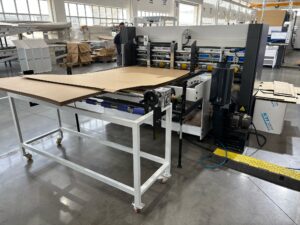
- They include automated handling systems that facilitate the loading and unloading of panels, improving ergonomics and reducing operator effort.
- In high-production environments, they make a significant difference in productivity, enabling work at higher speeds without compromising the quality of the result.
Key factors for choosing the right beam saw
Before deciding on a model, there are a number of factors you should carefully consider. Not all beam saws are the same, and not all are equally suited to every type of business:
| Production volume | The first and most important. If your workshop operates with low to medium volume, a front-loading machine with automatic pusher may be more than sufficient. If, however, your factory operates continuous shifts with high production, you will need a rear-loading machine or a fully automated system with motorised platform and capacity to handle heavy panel packs. |
| Cutting depth | The cutting depth determines how many panels you can stack and cut in a single pass. KDT beam saws, for example, achieve maximum cutting heights of up to 120 mm, which allows working with packs of several panels simultaneously, multiplying high performance without sacrificing cutting quality. |
| Table capacity and cutting length | The size of the panels you need to process defines the size of the machine. There are beam saws with cutting capacities of 3,200 mm and others that reach up to 4,500 mm. It is important to size this variable properly so you don't fall short as your business grows. |
| Working speed | The speed of the pusher and the saw carriage directly influences the number of cuts per hour. KDT Ibérica's beam saws work at speeds of up to 120 m/min in return and 95 m/min in feed, which translates into very fast working cycles and high production speed. |
| Handling systems | Panel handling systems, such as air cushion tables, motorised loading platforms and height measurement devices, make the difference in terms of ergonomics, safety and loading speed. The more automated the loading and unloading process, the lower the physical effort for the operator and the greater the overall efficiency. |
| Control and optimisation software | The control software is the brain of the machine. Good cutting software allows you to manage jobs, import optimisation patterns and customise the parameters of each operation. |
Types of beam saws: Front loading or rear loading?
One of the most important decisions when choosing a beam saw is the type of loading. There are two main categories, and each has its advantages depending on the type of work you do.
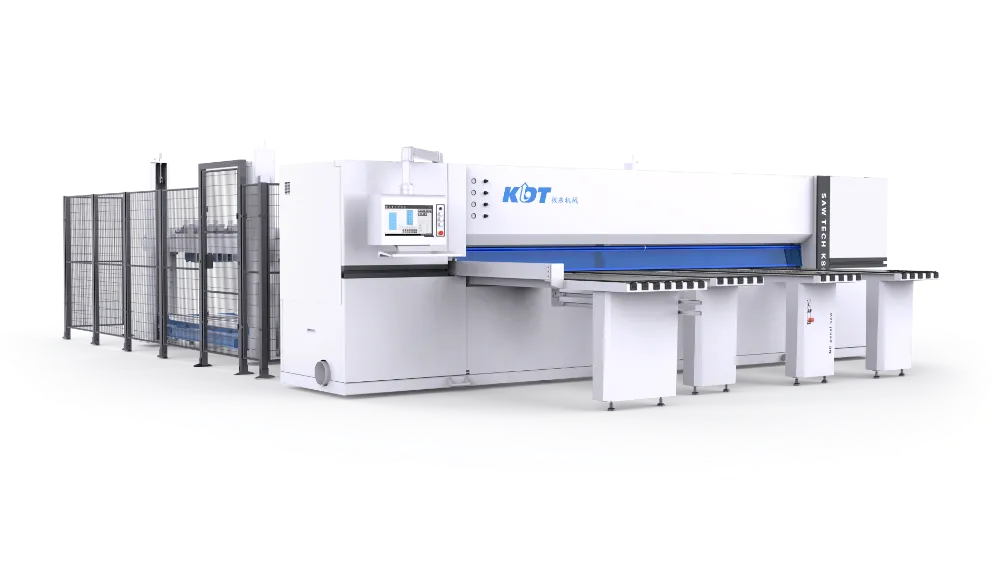
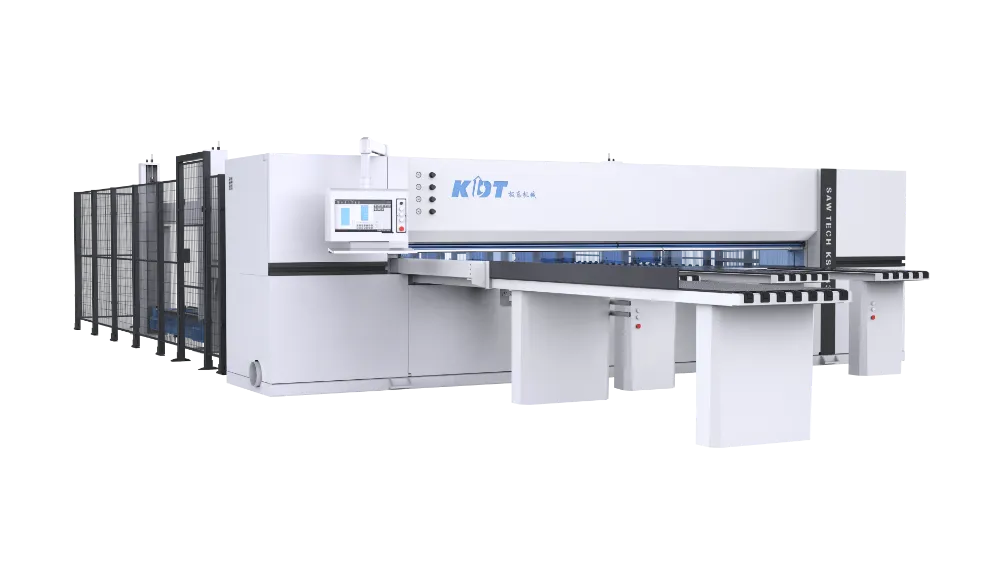
| Front loading These are the most common in medium-sized workshops and joinery shops. The operator introduces the panel from the front of the machine, positions it and the machine performs the cut. They are more compact machines, easy to operate and perfect for varied work thanks to their versatility. | Rear loading They are designed for high-production environments. The motorised platform raises the stack of panels to working height, the pusher takes them and introduces them into the cutting line autonomously. This allows for rapid changeover between operations, reduces manual intervention and greatly increases the work rate. |
The decision that impacts your production every day
Choosing a beam saw is not just about comparing specifications. It's about understanding how you want to work today… and how you want your workshop to operate in a few years' time.
When you carefully analyse your work volume, your real needs and your production flow, the choice stops being complicated and starts being strategic. At KDT Ibérica we work to help you find a solution that fits you, your team and your way of working.
If you are considering incorporating or upgrading your beam saw, you can consult our complete catalogue of beam saw cutting machines or request advice to find the option that best suits your quickly and easily from our website.

 Spanish
 Portuguese
 English