
If you've ever had to repeat a cut because the panel didn't square properly, you know what it costs in time, material and patience. In many workshops, the problem isn't the operator, it's the machine.
Knowing how to choose an industrial sliding table saw isn't just a technical decision, it's a decision that directly affects cut quality, productivity and safety in day-to-day operations.
A well-chosen sliding table saw for wood allows you to make precise cuts effortlessly, work with large panels with complete stability and maintain a constant production rhythm without errors.
In this guide we are going to look at what to consider when buying a sliding table saw, and how to choose the best option according to your type of work.
Why do you need a sliding table saw in your workshop?
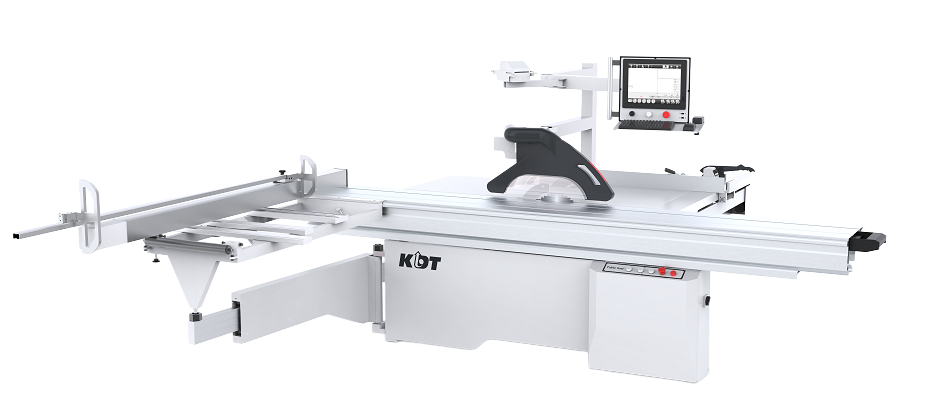
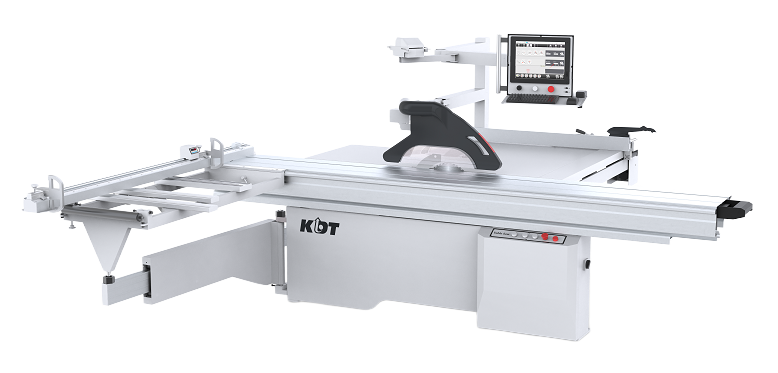
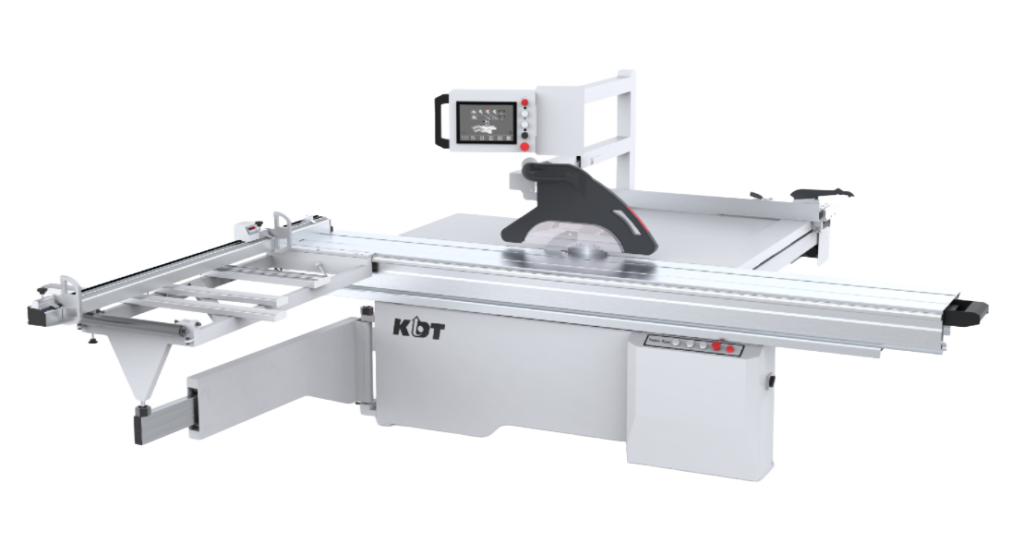
A sliding table saw is a machine designed to make straight, square cuts with high precision, especially on large-format panels.
Unlike other machines, it not only cuts but also allows you to:
- Work with large workpieces with stability
- Maintain perfect squareness on every cut
- Achieve cut quality ready for assembly
In joinery, it is one of the most important professional machines, as it is involved in practically every stage of the process.
What to consider when buying a sliding table saw
Not all machines perform equally in an industrial environment, so here are some key aspects to consider before making your purchase:
1. Cutting capacity
This is one of the most important points. You should look at:
- Maximum panel dimensions
- Carriage travel
- Cutting height
If you work with large panels, you need a sliding table saw with sufficient capacity to handle them effortlessly.
2. Stability and structure
A stable machine guarantees vibration-free cuts. This directly affects:
- Cut quality
- Blade service life
- Operator safety
A robust structure is key in high-performance industrial machinery.
3. Precision of the guiding system
The guide system and sliding carriage are what make the difference. It must allow:
- Smooth movements
- Precise adjustments
- Repetitive cuts without deviations
If it fails here, you'll have constant problems in production.
4. Power and blade type
The motor and cutting blade must be suited to the type of material. Cutting the following is not the same:
- Melamine
- MDF
- Solid wood
A good combination of power and blade allows clean cuts without chipping.
5. Workplace safety
Safety is not optional. A sliding table saw must include:
- Blade guards
- Emergency stop systems
- Safe material control
This not only protects the operator, but also improves confidence in daily use.
6. Integration into your production
If your company works with several machines (CNC, beam saws, etc.), the sliding table saw must fit into the workflow. This allows you to:
- Optimise times
- Reduce handling
- Improve overall efficiency
How it impacts quality and productivity
A good sliding table saws for wood not only improves cutting, but also completely transforms the way work is done in the workshop. When the machine responds with precision and stability, the entire process becomes more fluid, predictable and profitable.
Production
Here the difference is clear. With a suitable sliding table saw you cancut more pieces in less time, without relying so heavily on constant adjustments or manual checks.
This is important when working with large panels or in production runs, where every second counts and any error is multiplied.
Quality
A well-adjusted machine enables clean finishes from the first cut, without chipping or deviations. This greatly facilitates subsequent stages of the process, such as edge banding or assembly, as the pieces fit correctly without requiring corrections.
Reduction of errors
A sliding table saw with good precision and stability minimises common errors such as out-of-square cuts or differences between pieces. This translates into less rework, less material waste and greater confidence in the final result.
Workshop efficiency.
By reducing interruptions, adjustments and repetitions, the workflow becomes more organised. Operators work with greater safety and continuity, which enables a constant production pace to be maintained without compromising quality.
How to choose the best option for your workshop
There is no single answer to which is the best sliding table saw. The decision depends on:
- Type of production
- Work volume
- Materials you use
- Level of precision required
What matters is choosing a machine that adapts to your reality, not the other way round.
A decision that defines your production
At KDT Ibérica we work with workshops and companies that need to improve their cutting process without complications.
The aim is not only to offer a wide range of industrial machinery, but to help you choosing a sliding table saw that fits your production, your materials and your way of working.
If you're considering taking the step, analysing the options carefully will help you avoid mistakes and ensure results from the first cut.
You can visit our sliding table saws section to see the available solutions or request advice without obligation by completing our form.
Frequently asked questions
What should you consider when buying a sliding table saw?
You should look at cutting capacity, stability, precision, motor power, type of saw blades and safety level.
What materials can be cut with a sliding table saw?
Mainly wood, melamine, MDF and solid wood, although it can also work other materials such as metal, depending on the blade.
Does a sliding table saw improve production?
Yes. It allows you to make precise cuts faster, with fewer errors and greater efficiency.
What is the difference between a sliding table saw and other saws?
The sliding table saw offers greater precision, stability and capacity to work with large panels.

 Spanish
 Portuguese
 English