
Woodworking machinery: professional catalogue for joinery and furniture manufacturing



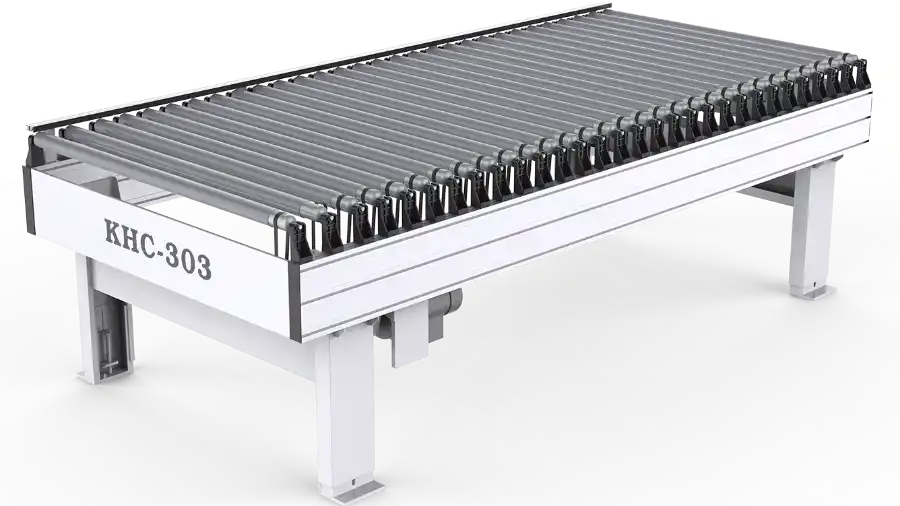

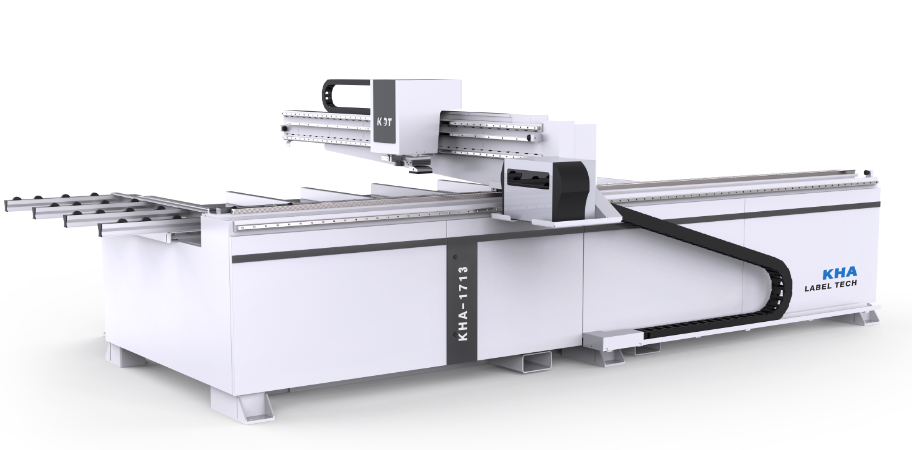
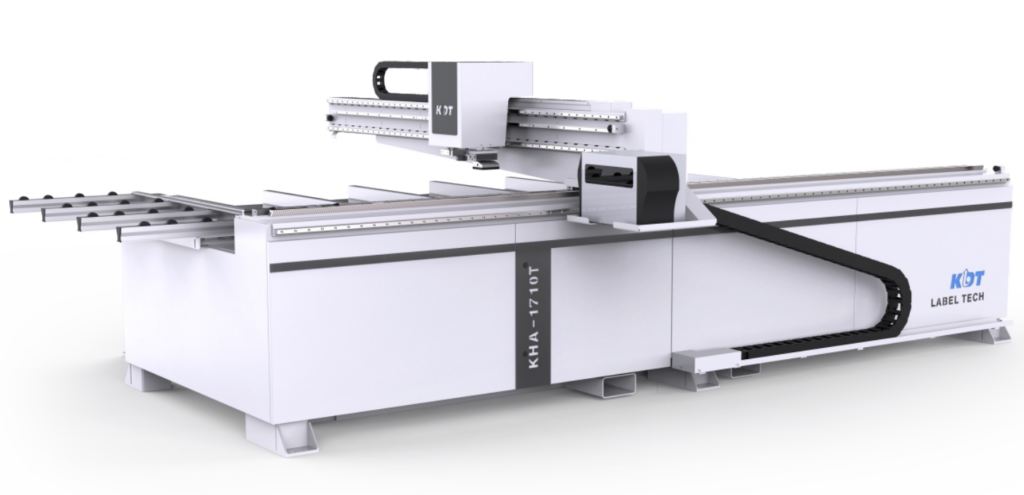

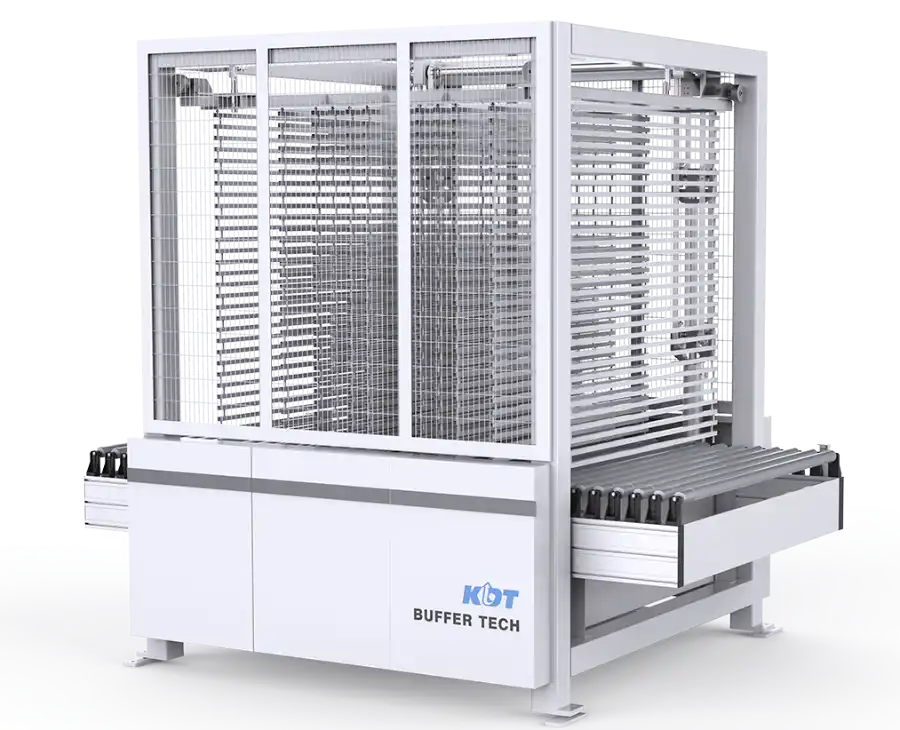

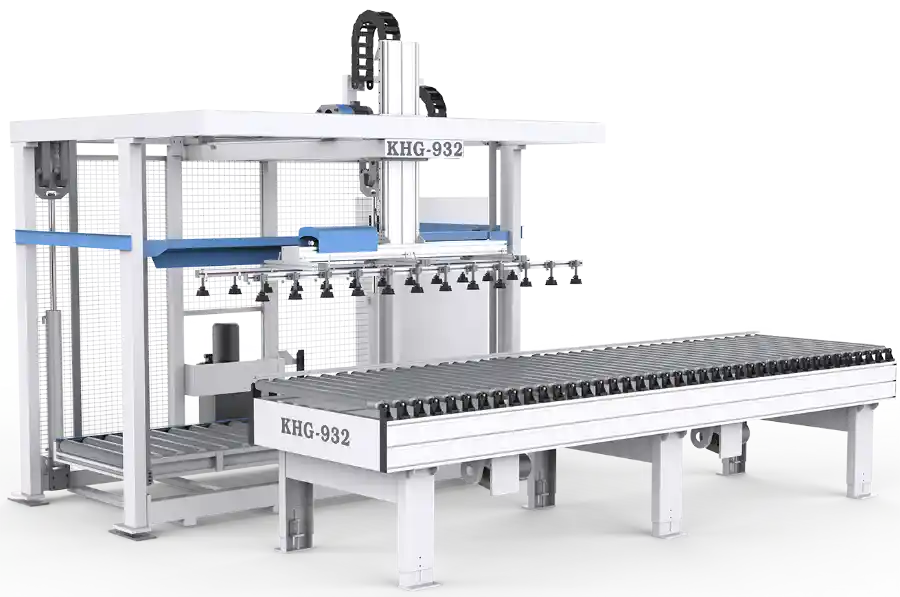
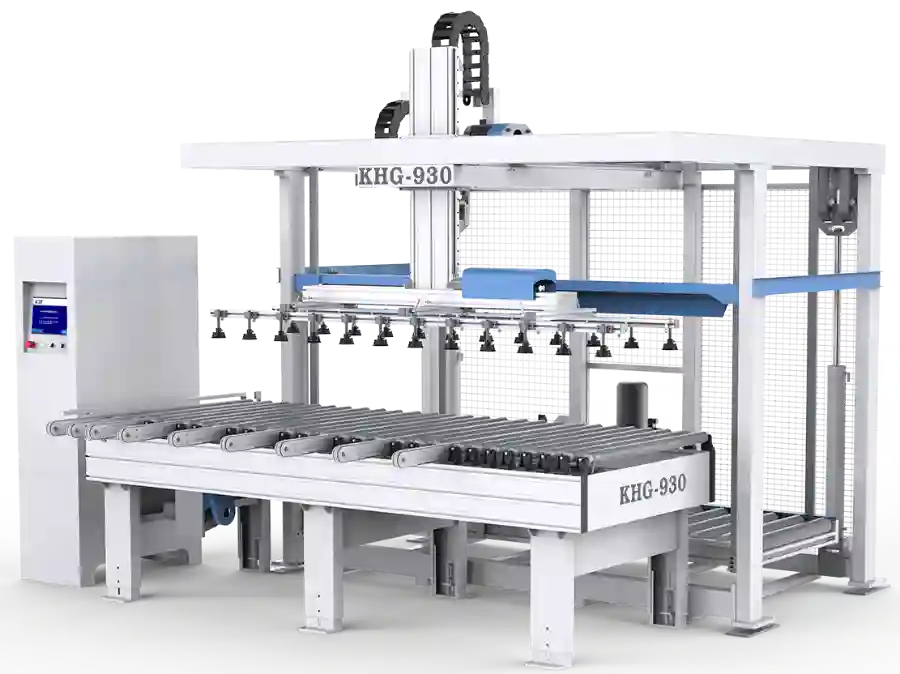
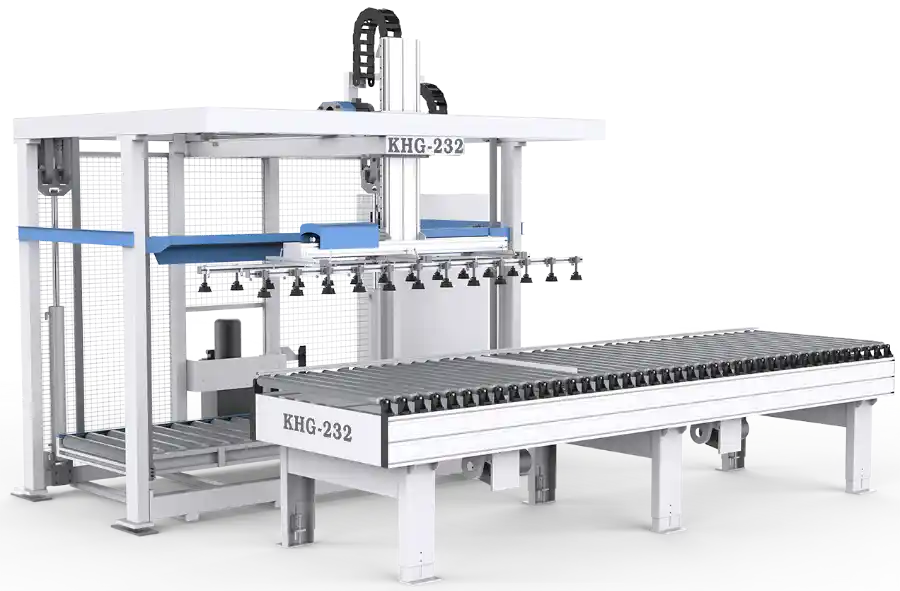
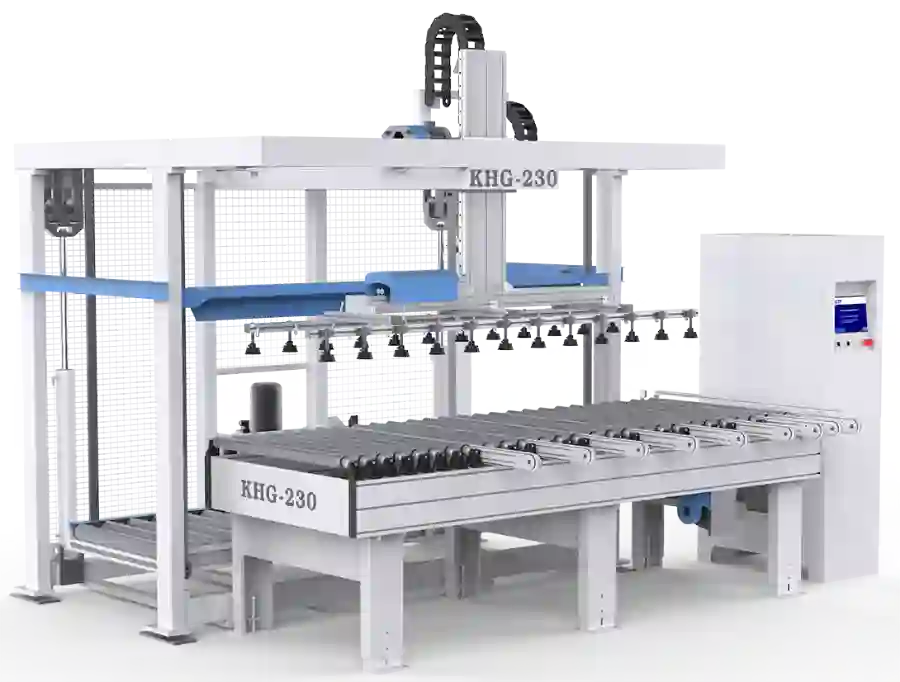
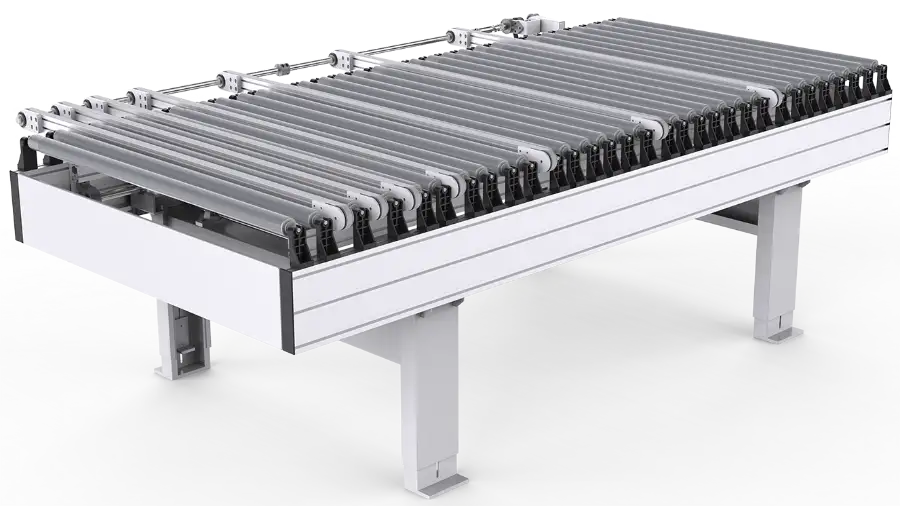
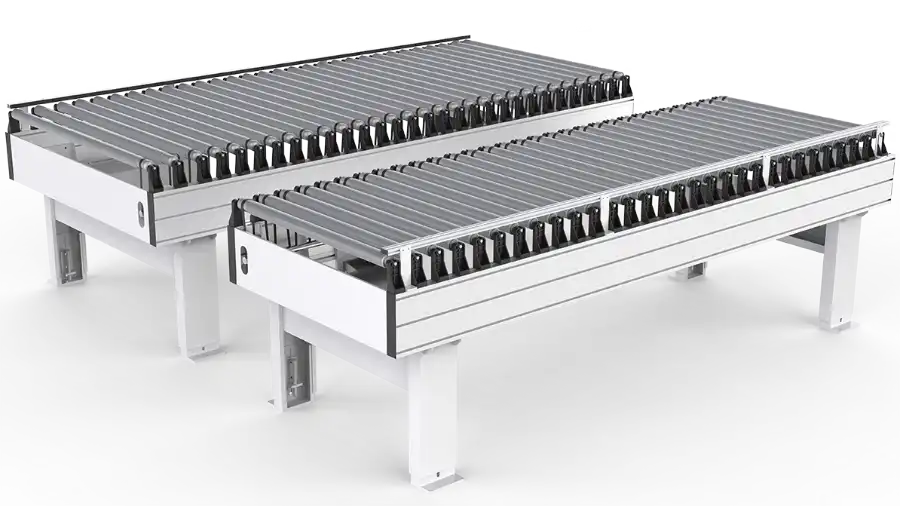
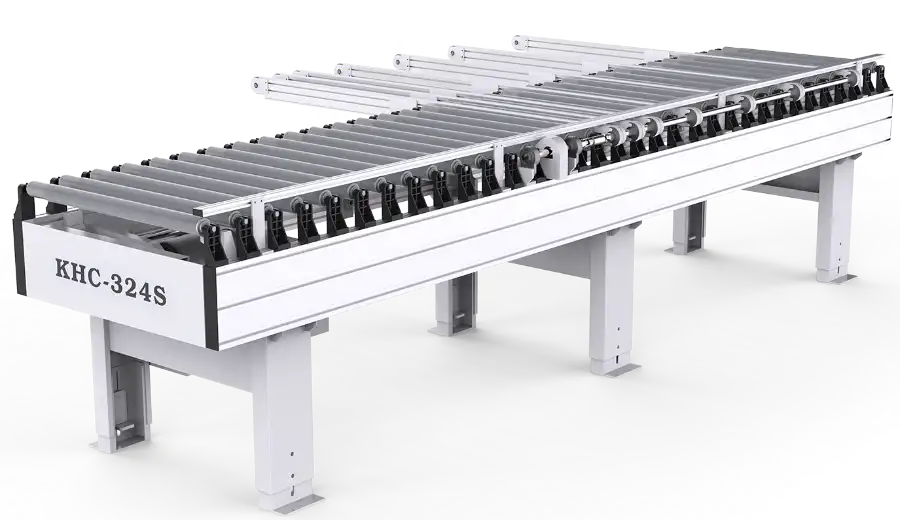
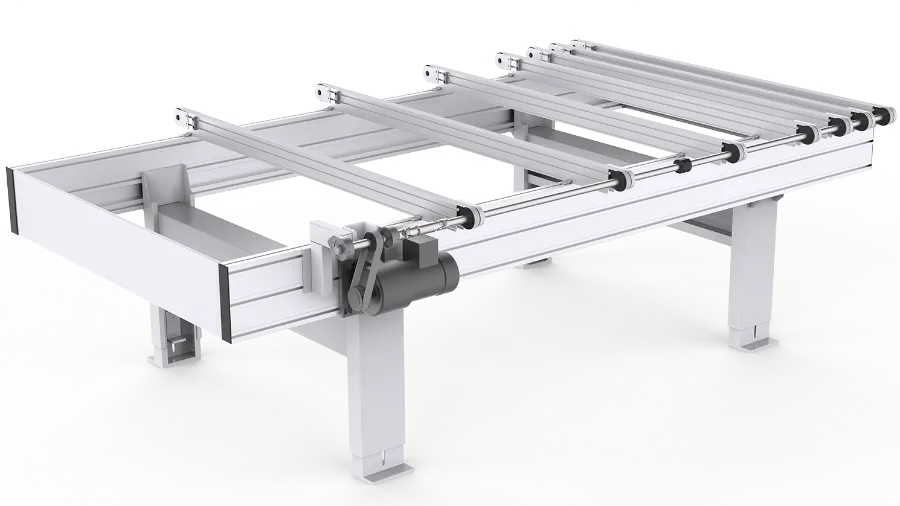
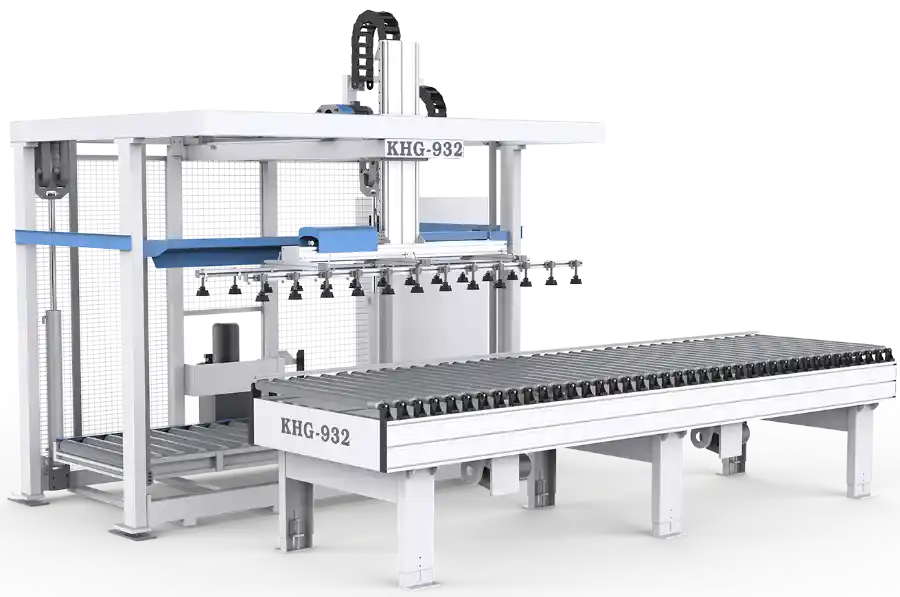
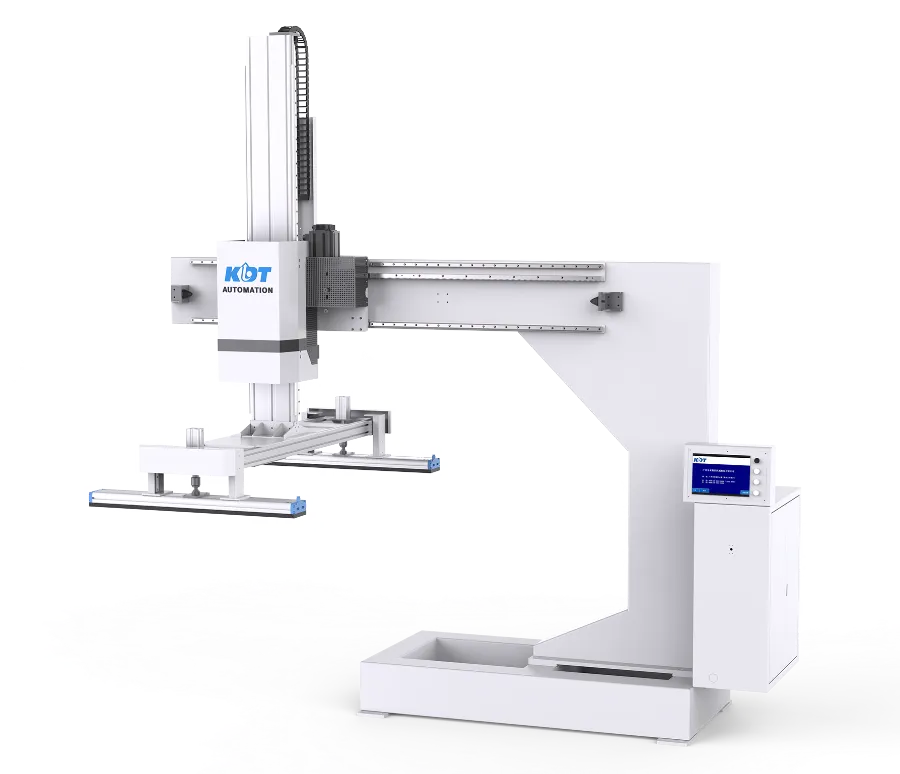
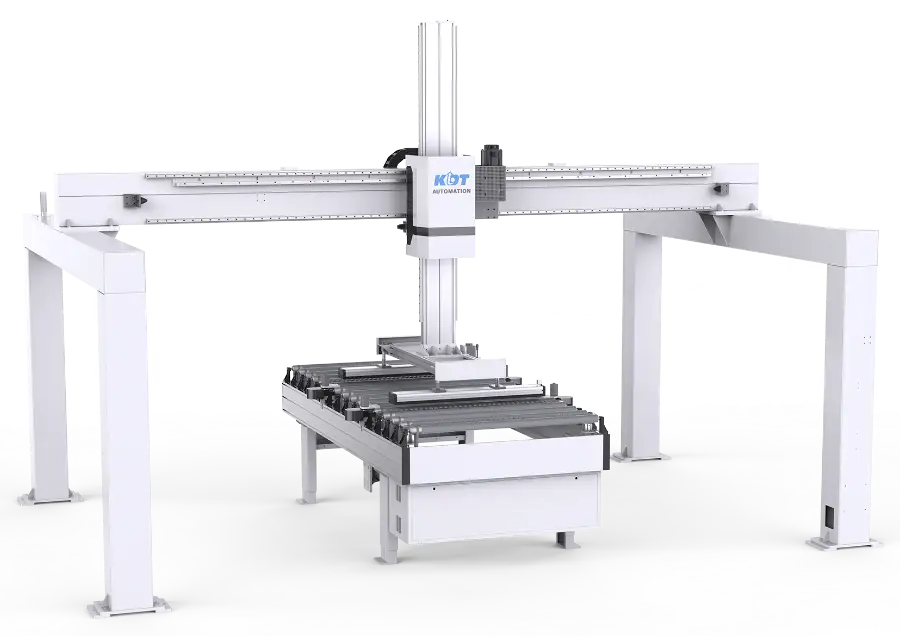
At KDT Ibérica we bring together all the woodworking machinery that a professional joinery workshop or furniture factory needs to work with real efficiency: from the first saw cut to the final finish.
Our catalogue covers each phase of the production process with equipment adapted to your production volume, and you can see them running before buying in our showrooms in Spain, Portugal and Morocco.
If you are looking for industrial woodworking machinery with real technical support, you're in the right place. Below you will find the complete catalogue organised by machine family, with the criteria that matter when making a purchasing decision.
What type of woodworking machinery does your workshop or factory need?
The answer depends on two variables: the volume of pieces you produce and at which point in the production process you have the bottleneck. A 3-person joinery workshop making bespoke kitchens does not have the same problem as a serial furniture plant with double shifts.
A simple way to guide yourself:
- Professional joinery workshop (medium production): you need a good sliding table saw, single-sided edge banding machine, belt sander and multi-spindle boring machine. With that base you cover cutting, edging, finishing and boring.
- Furniture factory or panel industry (high production): the step up is to a beam saw with cutting optimisation, CNC or laser edge banding machine, machining centre and automated flexible production lines. Here ROI is measured in pieces per shift and operator cost per unit.
- Workshop with limited space: combined machines or compact high-precision solutions are the answer. They integrate multiple functions without multiplying floor space.
The key is not to buy the most powerful machine, but the one that fits your process. That's why at KDT we always work with a prior visit or technical consultation before finalising any quote.
Cutting machines: sliding table saws and industrial beam saws
Cutting is the operation that determines everything that follows. A poor square or a cut with fibre tear-out forces rework, wasting time and material. That's why the choice between sliding table saw and beam saw is not just about budget, but about volume and type of work.
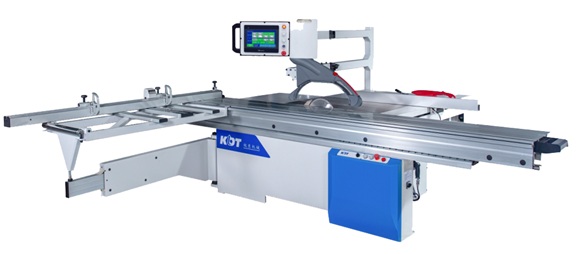
Sliding table saws for wood: precision in every cut
The sliding table saw is the reference cutting machine in any professional carpentry machinery workshop. It works with a sliding carriage that guarantees perpendicularity of the cut and allows panels to be cut with consistent precision, even during long shifts.
When selecting a sliding table saw, the most important parameters are:
- Carriage cutting length: defines the maximum format you can work with. For kitchens or wardrobes you need at least 3,200 mm.
- Main motor power: from 5.5 kW onwards you have guarantees of clean cutting in high-density board or in double-stack format.
- Cutting height: essential if you work with stacked panels to gain cycles.
- Tilting fence: if you produce angled pieces, it's essential that the fence has an automatic stop.
In our catalogue you'll find models such as the KS-132 and KS-138, in different configurations (with tilting table, with pneumatic pusher or with electronic positioner), designed for both medium-sized workshops and continuous production lines.
Beam saws for industrial use: maximum output in long production runs
When volume exceeds what a sliding table saw can handle cost-effectively, the beam saw is the answer.
The main difference is that the sliding table saw requires an operator to position each cut; the beam saw works with optimisation cutting lists loaded from a PC, eliminating human error and dramatically increasing productivity.
Specific advantages over the sliding table saw in high-volume production:
- Automatic loading and optimisation of cutting lists (from the office or directly on the machine).
- Much faster cutting cycles per stack of panels.
- Less operator dependency: one person can supervise whilst the machine works.
- Traceability of each cutting batch integrated into the system.
Our beam saw KS-832D with front loading is one of the best-selling models for furniture manufacturers with medium-to-high production volumes. If your line requires full automation, we also offer solutions with integrated loading and unloading automation systems.
Edge banding machines: professional finishes without gaps
Once the panel is cut, the edge is the first sign of quality perceived by the end customer. A well-chosen edgebander makes the difference between a standard piece of furniture and a premium catalogue one.
Our edgebander catalogue covers three main families:
Single-sided edgebanders: the most widespread solution in professional joinery workshops. They apply edge to one face at constant speed, with integrated milling, scraping and polishing units. Models such as the KE-258the KE-655JSKA or the KE-665JSKA cover from medium-volume workshops to continuous production.
CNC and laser edgebanders: for demanding production where the joint between panel and edge must be invisible. Laser technology activates the edge without glue, eliminating the joint line and achieving a superior finish. The KE-710GBSUT Laser 3.0S is our reference model for furniture manufacturers competing in the high-end segment.
Curved edge banding machines and softforming: for workpieces with curved profiles or mouldings. The KDT-305MC allows edge banding of non-flat surfaces with the same consistency as a straight workpiece, expanding the catalogue of possible shapes without sacrificing automation.
If your production line requires it, we also offer double gluers that work both faces of the panel in a single pass, halving production cycles in long runs.
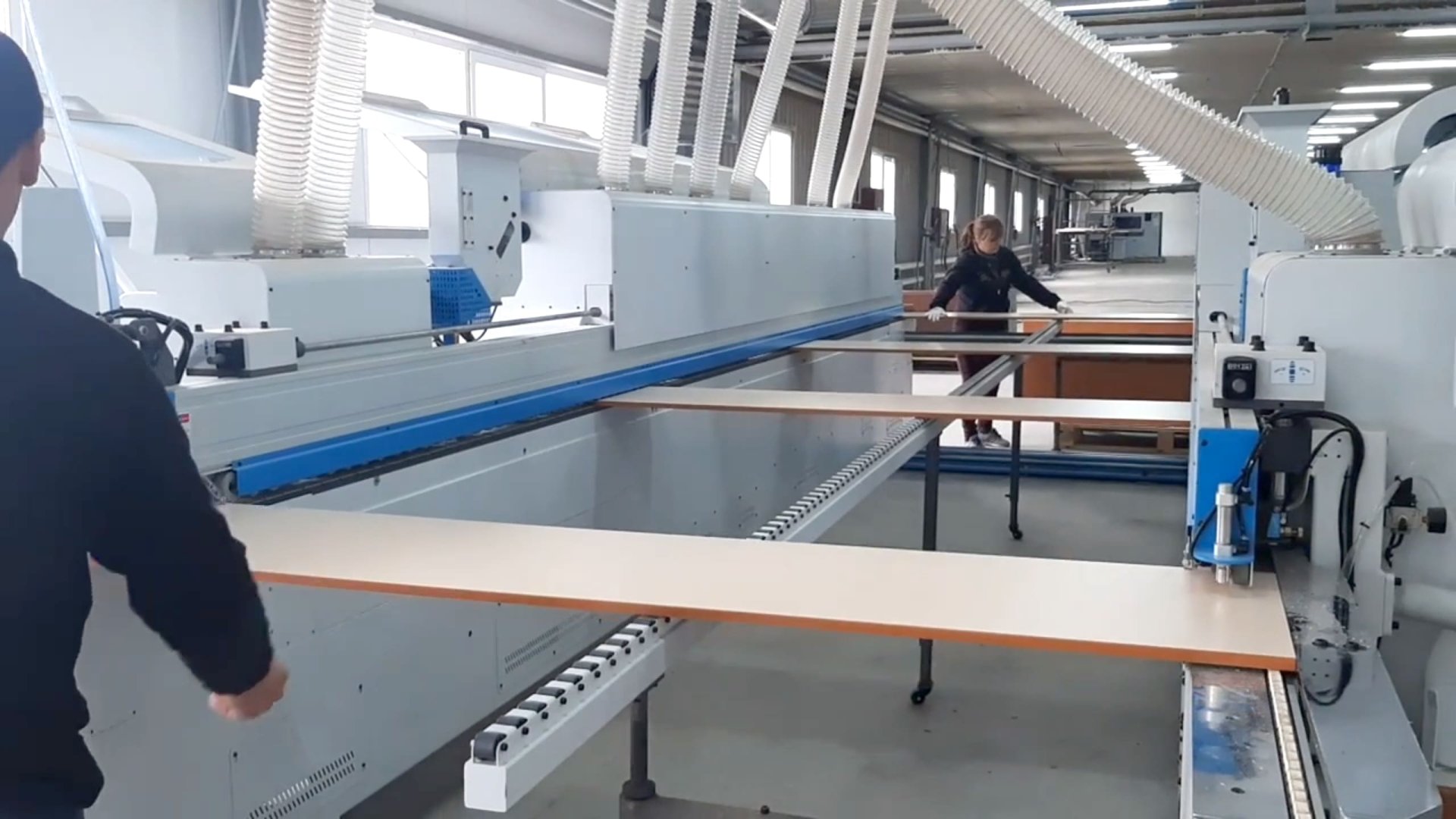
Industrial wood sanding machines: high-quality calibrating and finishing
The industrial wood sanding machines have a direct impact on the quality of the finished product and on the consumption of finishing materials (lacquers, varnishes, oils). A well-calibrated and sanded workpiece absorbs less product and delivers a more uniform result.
In our catalogue you will find the main types:
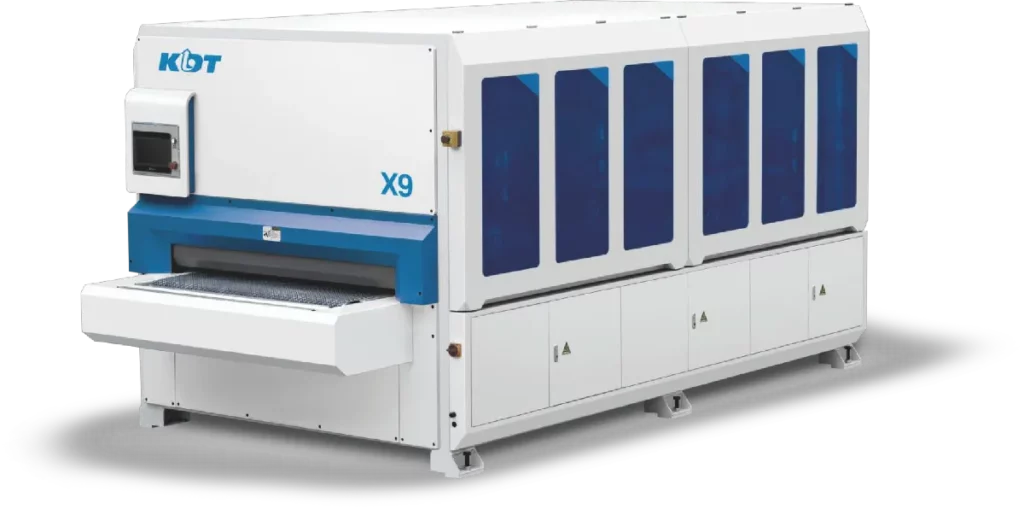
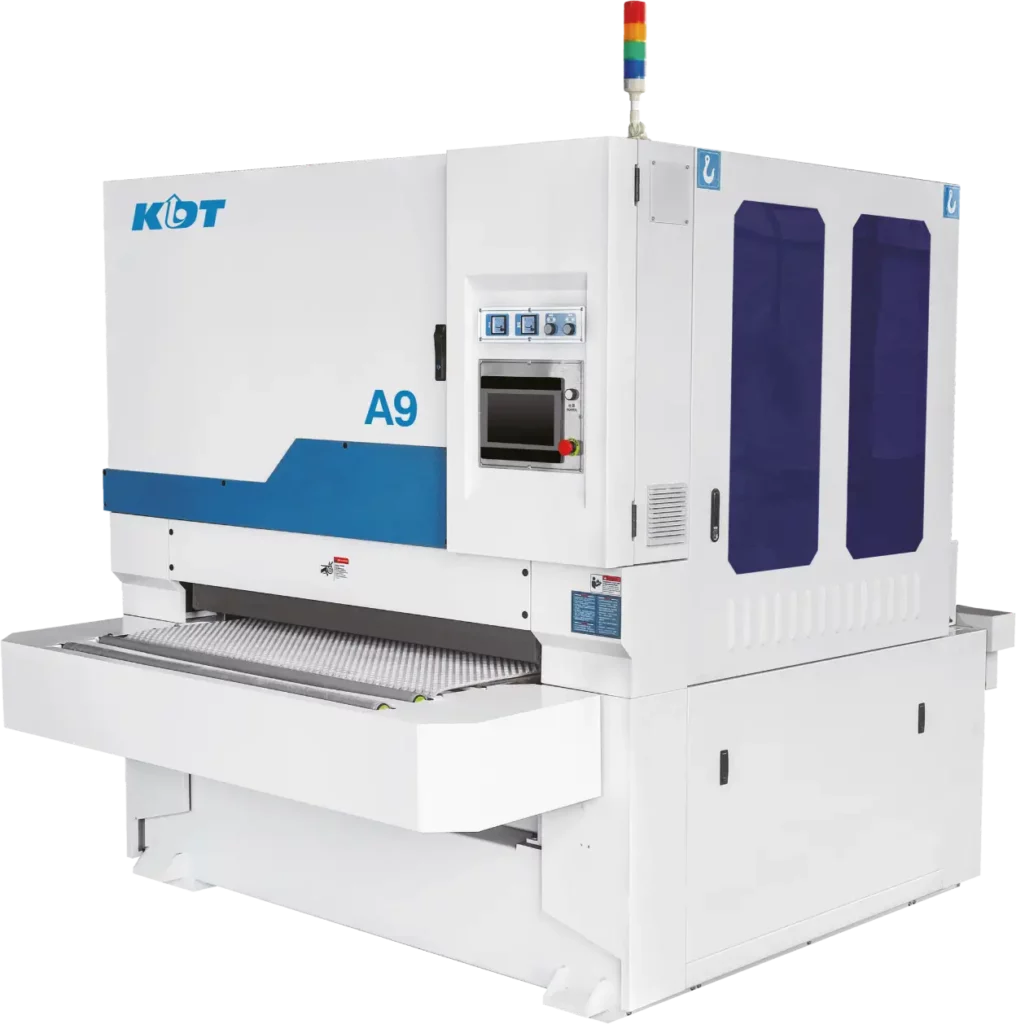
- Wide belt sanders: for calibrating panels and veneers. They eliminate thickness variations and prepare the surface for finishing. Essential before lacquering or varnishing in series.
- Sectional pad sanders: combine calibrating sanding with surface finishing in a single pass. Each pad works independently, adapting to irregularities in the workpiece.
- Brush sanders: ideal for textured surfaces, veneered MDF or workpieces with relief. Nylon brushes with abrasive grain work without marking.
- Edge sanders: for finishing and refining the edge once banded, especially on curved profiles or mouldings.
- Profile sanders: for work on complex profiles where conventional belts cannot reach.
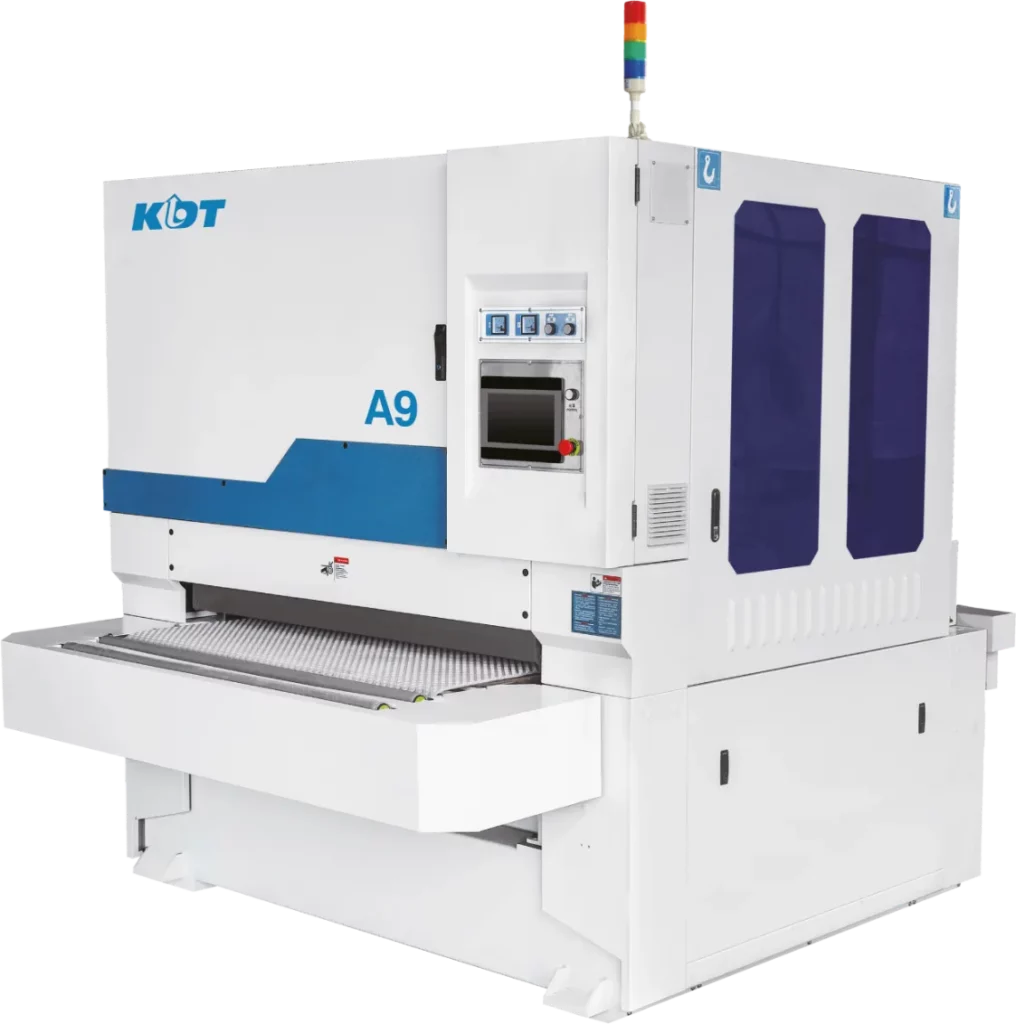
All our sanding machine models incorporate internal extraction system and blowers to keep the surface free of dust during the process, which improves the final finish and extends the life of the abrasive belt. This also directly reduces maintenance time and cost per workpiece.
Boring machines and CNC machining centres for wood
Boring and machining are the operations that have evolved the most in recent years thanks to CNC integration. The difference between a conventional multi-spindle boring machine and a machining centre is not just about precision: it's about production flexibility and format changeover time.
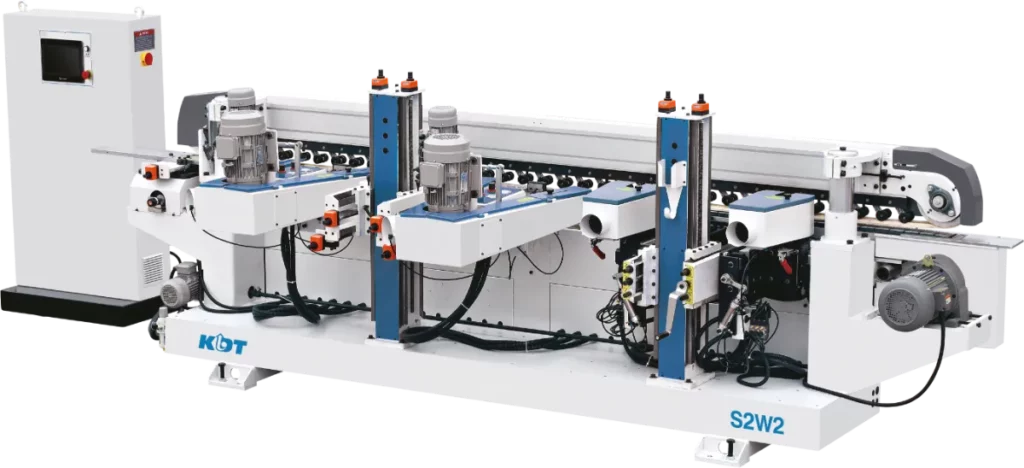
Multi-spindle boring machines: perfect for series production with fixed references. They work on several axes simultaneously (vertical, horizontal, dowel drilling) and allow very fast cycles when the format doesn't change. Our models KD-610HR y KD-612TH are a benchmark in upholstered furniture and kitchen workshops.
CNC boring machines: take it a step further by allowing drilling position changes from the programme without physically touching the machine. The KD-610XHZ and the KD-612G (with automatic tool changer) are the answer when the product catalogue is extensive and series changes are frequent.
Nesting CNC machining centres: the most versatile solution for manufacturers combining cutting, boring and routing on the same workpiece. The vacuum table holds the complete panel and the head performs all operations in a single cycle. Models such as the KN-3710DP or the KN-6410C with aluminium bars allow working from small parts to large-format panels.
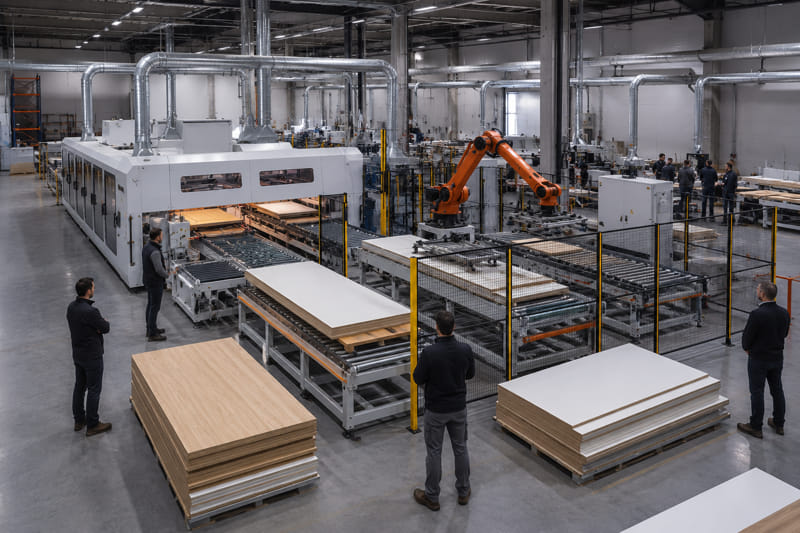
5-axis machining centres: for machining doors, kitchen fronts and parts with complex geometry. The KN-5516P works in five simultaneous axes, opening up design possibilities that would be unfeasible with conventional machines.
When to choose each option? The practical rule is simple: if you produce long runs with few references, a multi-spindle boring machine is more cost-effective. If you have an extensive catalogue or manufacture bespoke with frequent changes, the investment in CNC pays back in a few months through reduced changeover times and errors.
Other woodworking machinery: spindle moulders, routers and workshop tools
Beyond the main machine families, there are workshop machines that complete any production line or that solve specific operations with a very good cost-result ratio.
Spindle moulder for joinery: the table machine with vertical spindle is essential for working mouldings, grooves, rebates and profiles on solid wood pieces. With the right tooling, a good spindle moulder for joinery can replace several hand tools. If your workshop works with solid wood for windows, doors or rustic furniture, don't do without it.
Wood routers: both benchtop and portable routers have their place in workshops handling complex joinery or producing grooved and tenoned components. Benchtop CNC routers take the leap to fully automated profiling.
Planers and thicknessers: for working rough solid wood. The planer-thicknesser combines face planing and thicknessing in the same machine, allowing the workpiece to be brought to exact dimensions before continuing the process. It is a basic tool in any workshop working with natural wood, beams or decking.
Bandsaws: band saws are ideal for curved cuts, formatting irregular pieces or sawing logs in small sawmills. They are also used for initial roughing before planing or thicknessing.
Wood lathes: for workshops specialising in turned furniture, staircases, balusters or decorative elements. The lathe remains the reference tool for turned solid wood components.
Contact us if you are looking for any of these machines: although not all are prominently featured in our online catalogue, through our showrooms and partner network we can guide you towards the most suitable solution.
Why choose KDT Ibérica as your woodworking machinery supplier in Spain
There are many options for buying carpentry machinery in Spain, from online importers to local distributors. What sets KDT Ibérica apart is not just the catalogue: it is the customer relationship model.
Physical showrooms in Spain, Portugal and Morocco: You can see any machine from our catalogue in operation before signing anything. This is no minor detail: in an investment of several tens of thousands of euros, being able to validate cutting quality, noise level, control panel ergonomics and actual cycle speed makes the difference between a sound purchase and a production problem.
Equipment customisation to your process: We do not sell standard off-the-shelf machines. We analyse your production line and adapt the configuration (automation systems, cutting table lengths, extraction systems, integration with optimisation software) so that the machine fits into your process from day one.
After-Sales & Technical Service specialising in woodworking machinery: We have our own technical service in Spain with spare parts in stock. We do not measure response time to a breakdown in weeks: our goal is to keep your line down no longer than absolutely necessary.
Financing and ROI consultancy: We work with the purchasing manager or managing director to calculate the real return on each investment: reduction in operators, increase in pieces per shift, material savings through cutting optimisation. The numbers matter, and we like to present them before you decide.
Established presence in the Iberian market: We are a benchmark in woodworking machinery in Spain and Portugal, with hundreds of active installations in furniture factories, industrial joinery workshops and professional workshops.
Types of industrial woodworking machines
Woodworking machinery is classified according to its main function. Each type addresses specific needs when working with this material. Combined machines, for example, integrate several functions in a single machine, saving space and resources. Here are some of the most important ones:
Drills
Specialised boring machines for joinery enable drilling operations with great precision. Their versatility and adaptability make them indispensable allies for both hobbyists and professionals in the sector.
Squaring machines
The industrial sliding table saws are essential for right-angle cuts and panel production. They are a practical solution for workshops that need to carry out precise panel cutting.
Sanders
Sanding machines speed up the finishing process. There are orbital, belt or disc models, each adapted to different needs.
In addition, KDT sanding machines feature an internal extraction system and blowers to ensure perfect finishes and guarantee belt durability, and all this helps to reduce machine maintenance.
Disconnectors
High-production industrial cutting machines. With control via industrial PC to load cutting lists and carry out all work automatically. These lists can be designed on the machine itself or in the offices.
Machining centres
With nesting table or aluminium bar systems, machining centres offer high work versatility by combining panel cutting with drilling, grooving, according to different designs, which are loaded directly onto a computer.
With an intuitive and simple interface, designs can be created in the office and loaded onto the machine, which carries out the work automatically and at high speed.
CNC woodworking machinery: digital precision
The digital revolution reached joinery with CNC (computer numerical control) machines. This joinery machinery enables the automation of complex processes with millimetre precision.
CNC machining centres perform multiple operations without the need to change the workpiece position. They include interchangeable tools for milling, drilling and cutting.
For example, CNC milling machines work on customised panels according to digital designs. They can carry out complex jobs with perfect repeatability, ideal for series production.
Criteria for selecting woodworking machinery
Choosing the right woodworking machinery and cutting tools is a key decision that directly impacts productivity, final work quality and the profitability of a workshop or industrial facility.
Not all woodworking machines serve the same purpose, and not all environments have the same requirements. That's why it's important to consider certain fundamental factors before making an investment.
Volume of production
The first step is to determine how many parts are to be produced and how often.
- Professional joinery workshops: require professional woodworking machinery that combines performance with precision. Here it's common to have sliding table saws, planers, sanding machines and extraction systems to keep the workspace clean.
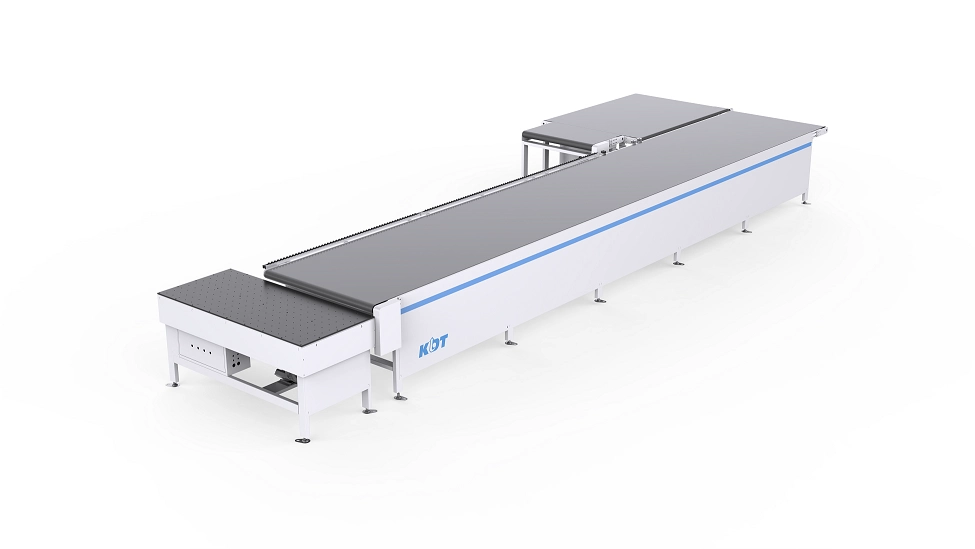
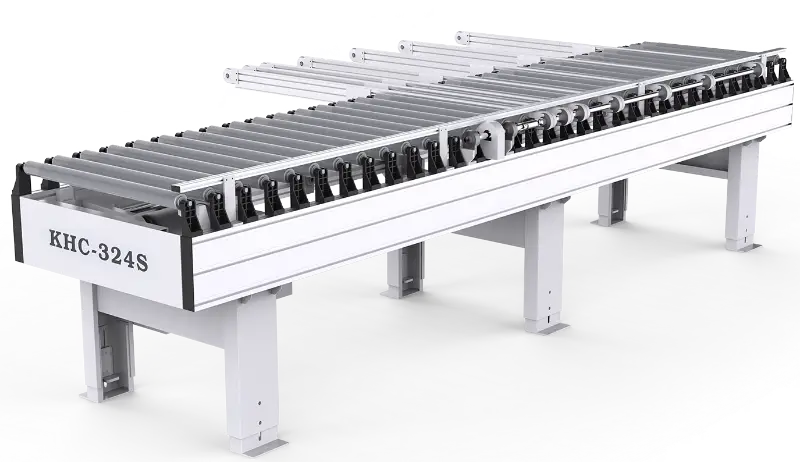
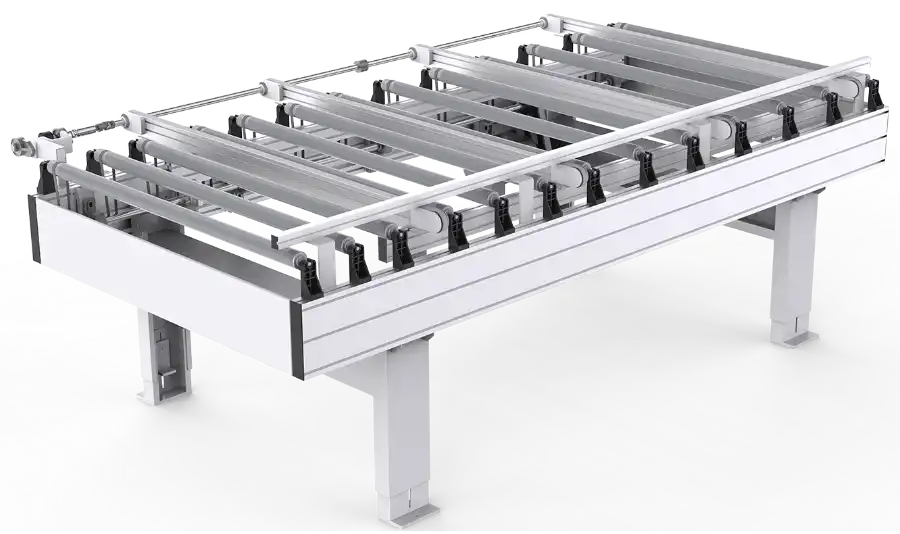
- Industry: high production volumes demand industrial woodworking machinery, such as CNC machining centres, automatic cutting machines, roller feed systems and complete production lines. This equipment is designed to work continuously and precisely over long periods.
2. Available space
The dimensions of the workspace directly influence the type and number of machines that can be installed. Some woodworking machines require additional space not only due to their size, but also for the movement of workpieces during handling.
For limited spaces, it's advisable to opt for adjustable machines with extendable or folding tables, or equipment that integrates several functions in a single unit.
3. Level of accuracy required
Not all woodwork requires the same level of detail. In structural joinery or construction projects, a good quality circular saw may be sufficient for quick and efficient cuts.
In contrast, for bespoke furniture manufacturing tasks, joinery machinery is needed that guarantees clean cuts, perfect joints and smooth surfaces.
Industrial woodworking machinery sales at KDT Ibérica
Having the right joinery machinery makes the difference between slow and limited work, and agile, precise and professional work.
Whether you work in a small artisan workshop or are part of an industry with high production volumes, choosing each piece of equipment carefully is essential to achieve an efficient, safe workflow with high-quality finishes.
At KDT Ibérica we are specialists in industrial joinery machines, y our aim is to help you find exactly what you need for your project. Request a quote now or browse our complete catalogue: we'll respond with personalised technical advice and no obligation.
Frequently asked questions about woodworking machinery
How much does industrial woodworking machinery cost?
The range is broad. An entry-level sliding table saw for a professional workshop can start from around €8,000-12,000, whilst a CNC machining centre with complete automation systems can exceed €150,000.
What matters is not the purchase price, but the cost per piece produced and the return on investment in your specific context. At KDT we carry out this analysis for you with no obligation.
What maintenance do these machines require?
It depends on the type of equipment, but generally the key points are: lubrication of guides and spindles, inspection of belts and cutting discs, cleaning of extraction filters and periodic calibration of stops and fences. Our After-Sales Service can establish a preventive maintenance plan adapted to your working shift.
Is it worth buying second-hand machinery?
In some cases yes, especially for inexpensive joinery machines with long cycles and few wearing parts, such as sliding table saws or spindle moulders from reputable brands.
On the other hand, for edge banding machines, CNC machines or machining centres, second-hand equipment carries more risk: technology evolves rapidly and maintenance costs can exceed the initial saving. We advise on a case-by-case basis.
How do I choose between a sliding table saw and a beam saw?
If you produce fewer than 80-100 panels per day and your batches are short, a well-configured sliding table saw is sufficient and more versatile. If you exceed that volume or work with cutting lists optimised by software, the beam saw gives you a clear return in productivity and waste reduction.
Do you offer financing for machinery purchases?
Yes. We work with financing options adapted to each company's profile, from leasing to rental. Consult us when requesting a quote and we will inform you of the available terms.
Can I see the machines before buying?
Yes, and we recommend it. We have showrooms in Spain, Portugal and Morocco where you can see the machines running with real material. Contact us to arrange a visit.
 Spanish
 Portuguese
 English