
Professional sliding table saws for wood
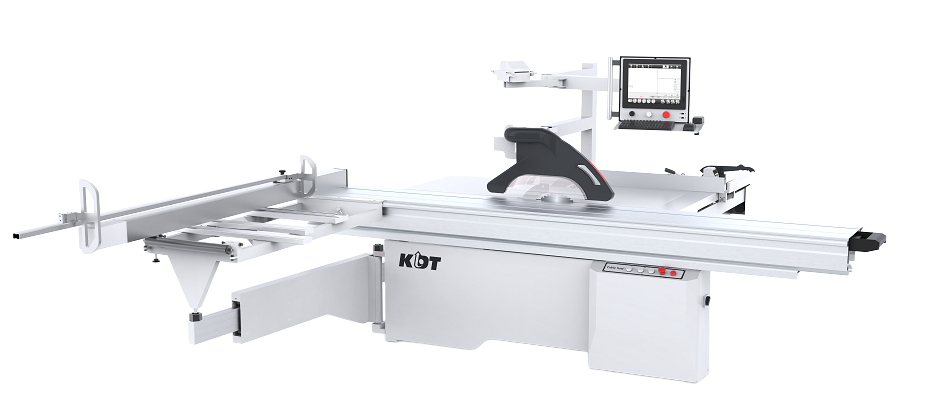
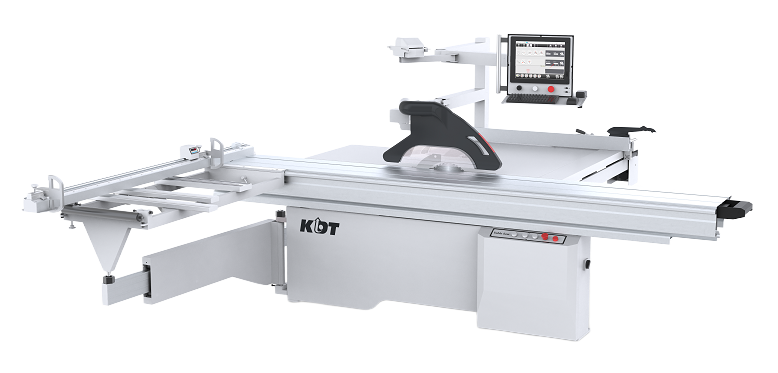
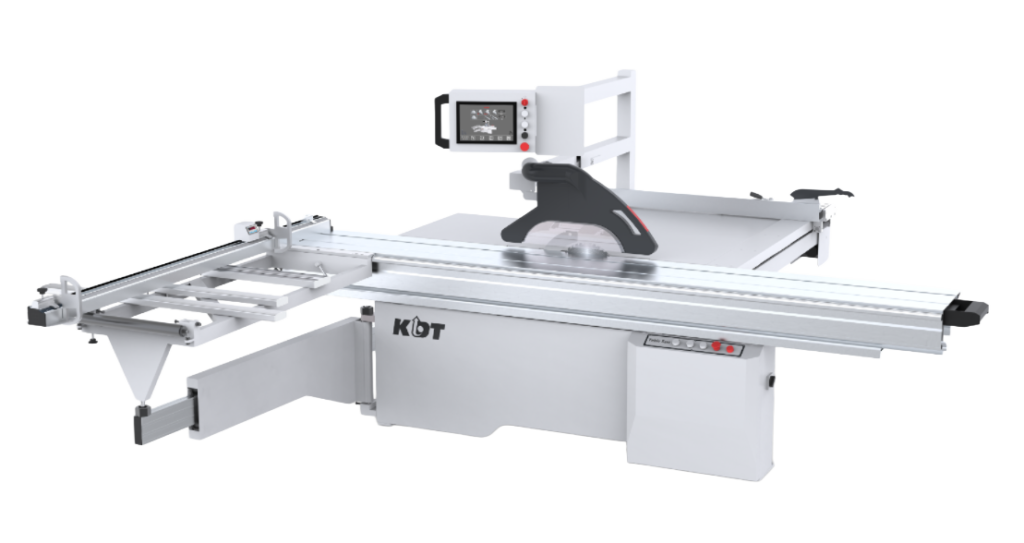
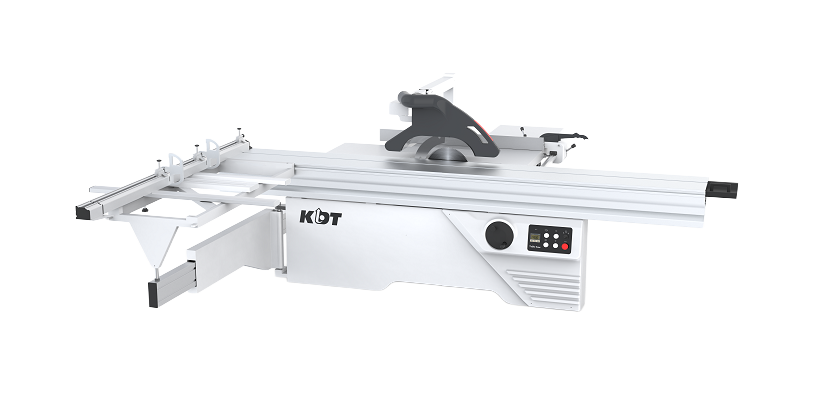
A sliding table saw is a circular saw mounted on a bed with a sliding carriage that guides the panel during cutting. Its main function is to obtain straight cuts and perfectly square angles, something that no hand saw or conventional table saw can guarantee with the same repeatability.
In practice, it is the central machine in any joinery workshop: it allows you to rough-cut boards, format pieces, cut veneers and obtain perfect squares for demanding assemblies. In industrial environments, it makes it possible to maintain tight tolerances shift after shift, with a saw blade that can tilt for angled cuts when the work requires it.
If you want to delve deeper into its technical characteristics and find out what the difference is between models, visit our section on cutting machines for wood.
What is a sliding table saw and what is it used for
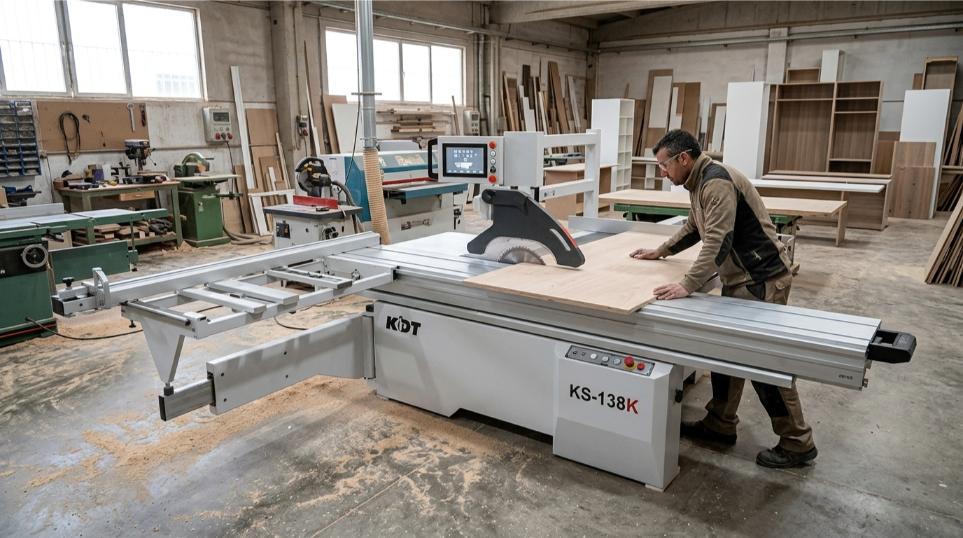
Our sliding table saws for wood: KDT models
Each model responds to a different production profile: from workshops with limited space that need a compact single-phase squaring machine at 220 V, to industrial installations that demand three-phase power and a large-format carriage.
Sliding table saw KS-132K — View product
KS-138PL Sliding Table Saw — View product
Sliding table saw KS-138K — View product
Sliding table saw KS-138PV — View product
Sliding table saw KS-132C — View product
Squaring machine KS-132 C2 — View product
If you don't know where to start, in each product data sheet you will find the complete technical data, and our team can guide you according to your pieces, your volume and your available space.
Types of sliding table saws for wood
Not all sliding table saws are the same. Choosing the right type is the first step to avoid overpaying or falling short on capacity:
If you are looking for a sliding table saw to equip your workshop or production line, you are in the right place. At KDT Ibérica we bring together a catalogue of sliding table saws designed for professional joinery, furniture manufacturers and the wood industry, with the backing of a specialised technical team and the possibility of seeing each machine in operation in our showrooms before deciding.
Want to know which model fits your production? Check out our guide on how to choose a professional sliding table saw for wood o request a personalised quote and we'll advise you with no obligation.
220v single-phase sliding table saw
Connects to domestic or reduced three-phase supply. The usual option for small and medium-sized workshops without industrial mains. Sufficient power for bespoke joinery work and short runs. More affordable starting price.
Small or workshop sliding table saws
A small sliding table saw is designed for confined spaces without sacrificing precision. More compact carriage, but with the same straight and square cutting performance. Ideal for the cabinet maker or joiner working to order.
Industrial three-phase sliding table saw
Power and large-format carriage for continuous production. Designed for furniture manufacturers, panel industries and high-demand workshops. Longer motor life and greater stability in long cuts on large-format panels.
Vertical sliding table saw
Takes up less floor space because the panel is worked in a vertical position. Very useful when space is the limiting factor. Less common in intensive production, but highly valued in urban or installation workshops.
Applications in joinery and industry of the wood sliding table saw
Our KDT sliding table saws can be used in multiple fields, being especially useful in professional joinery and other industries related to material processing. These machines are used for:
- Manufacturing processes in joinery: the sliding table saw for wood is a fundamental tool in workshops working with furniture, doors, windows and other wooden elements, as it allows clean cuts with an excellent final finish.
- Industrial production: companies dedicated to the manufacture of parts for construction, street furniture and decorative elements need this technology to ensure that each cut meets the required standards.
Sliding table saws also play a prominent role in the production of components for prefabricated construction and in the panel industry. In these environments, the ability to work in series with repeatable cuts is as important as the precision of the first cut. The tilting blade on some models also expands the work possibilities, allowing bevels and angled cuts without changing tools.
If your business is a furniture factory or a panel production line, we recommend you also explore our section on machinery for furniture manufacturers, where you'll find the complete ecosystem of machines that work alongside the sliding table saw: edge banding machines, multi-spindle boring machines, sanding machines and CNC machining centres.
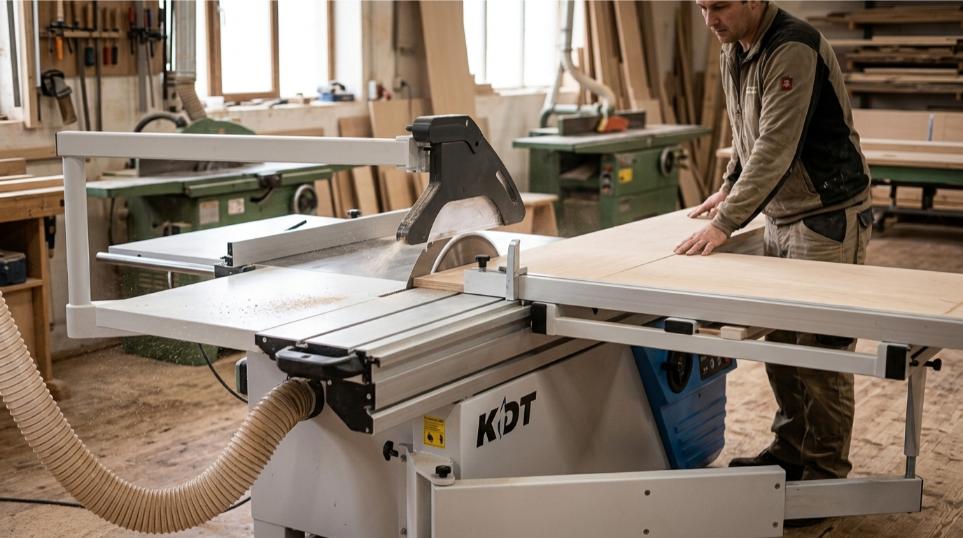
The technology incorporated into each joinery machine guarantees exact cuts and impeccable finishes. The development of a sliding table saw for industrial environments enables precision levels to be achieved that adapt to the needs of large-scale production. Likewise, the integration of high-quality components in each joinery sliding table saw contributes to the machine's durability and stability, which translates into reduced maintenance times and greater operational performance.
Technological innovations also enable the sliding table saw to work continuously, guaranteeing consistent and reliable results including options with dust extraction that facilitate cleaning of the work area.
Precision technology in sliding table saws
The sliding table saw has multiple features that make it an indispensable tool for manufacturing industries. Its key features include:
- High-precision cutting and squaring capacity: enables exact cuts and perfectly square corners to be obtained, ideal for quality assemblies and finishes.
- Robustness and stability: designed to withstand long working days, maintaining its performance even under demanding conditions.
- Advanced safety systems: incorporate devices that guarantee a safe working environment, minimising operational risks.
If you want to know the specific characteristics of our sliding table saw models for wood, such as diameters, type of tilt, aluminium carriage sizes, circular saw blade details, etc. visit our sliding table saw catalogue, where you can make the best decision according to the price and features of each sliding table saw for wood.
Characteristics of a sliding table saw for wood
Choosing the right sliding table saw involves analysing the type of production, the level of precision and the technical features:
- Precision: capacity to perform straight cuts and precision cuts.
- Control: adjustments that enable cuts to be made with total control of the square.
- Power: performance of electric machines for continuous work.
- Price: evaluate the price of the sliding table saw according to its features.
- Integration: compatibility with compressors and dust extraction for better cleanliness.
- Versatility: use in various applications such as circular cutting or routing.
To these criteria we add two that buyers often overlook: the actual carriage size (which determines the maximum panel format you can work with) and the type of current available in your installation.
A single-phase 220 V sliding table saw is the most straightforward solution if you don't have three-phase power, but if your production grows, an industrial three-phase machine will offer better return on investment in the medium term.
How to choose the best sliding table saw for wood according to your needs?
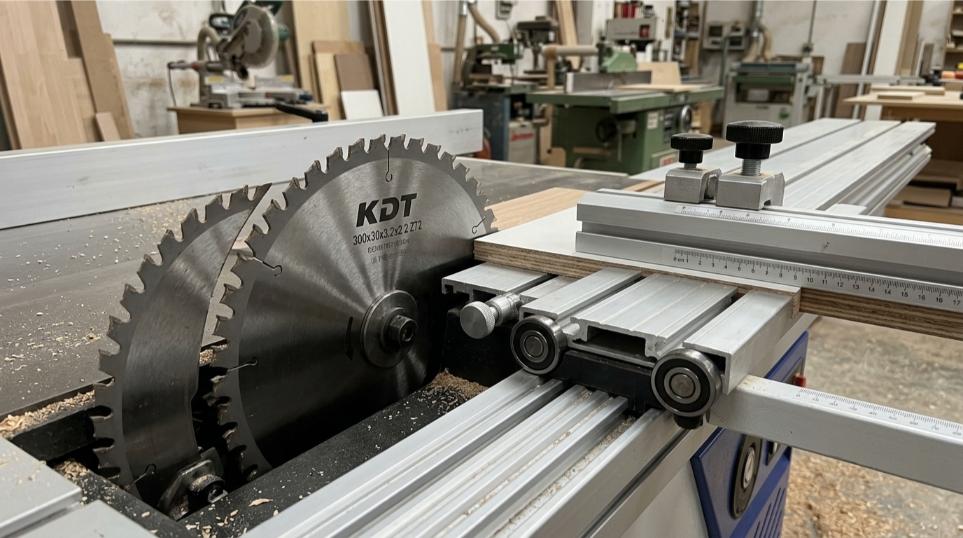
Cutting and squaring versatility
One of the greatest advantages of buying a sliding table saw for wood is its versatility in handling different types of cuts and configurations. This equipment is characterised by:
- Precise and customised adjustments: allows configuration of cutting parameters according to each project's specifications, adapting to different types of wood.
- Intuitive operation: its user-friendly interface on models with screen or industrial PC facilitates machine operation, enabling both expert operators and new users to achieve professional results.
- Batch production capability: ideal for production environments where repetition and precision are fundamental to process success.
Why choose a KDT Ibérica sliding table saw
There are many suppliers of woodworking machinery, but few offer what we call the complete service cycle: pre-sales advice, showroom demonstration, installation and after-sales technical support with our own spare parts.
In our showrooms you can see the sliding table saw you're interested in working with your own material before signing any order. It's not a video or a technical data sheet: it's the actual machine making the cut you need. This eliminates doubts and avoids surprises after delivery.
In addition, our specialist After-Sales & Technical Service covers Spain, Portugal and Morocco, with technicians trained on each product range. A machine standing idle is lost production, and we know it: that's why our technical service network is designed for fast response times and availability of accessories and spare parts without unnecessary delays.
If your workshop grows or your needs change, we also help you adapt the machine configuration or incorporate new tools into the process, from sanding machines and boring machines to edge banding machines, all within the same KDT ecosystem.
Ready to take the next step?
Request your personalised quote or browse the complete catalogue of KDT sliding table saws and find the saw that best fits your workshop and production. Our team will respond without obligation.
Frequently asked questions about sliding table saws
How much does a sliding table saw for wood cost?
The price of a sliding table saw varies depending on the model, power and features. A single-phase sliding table saw for workshops starts at more affordable ranges, whilst an industrial three-phase machine with a large-format sliding table represents a larger investment. The most useful approach is to request a personalised quote: this way you get the real price according to your configuration, with no surprises.
What is the difference between a single-phase and a three-phase sliding table saw?
The main difference is the electrical supply and resulting power. A single-phase sliding table saw at 220 V connects to any domestic or small workshop installation and is sufficient for bespoke joinery or short runs. A three-phase sliding table saw requires an industrial supply but offers greater power, better performance in continuous cutting and greater motor durability under load. If you have three-phase available and produce in series, the three-phase version pays for itself in a short time.
Is it worth buying a second-hand sliding table saw?
A second-hand vertical sliding table saw can be an option if the budget is very tight, but you need to assess the wear on the carriage, the condition of the blade and the safety systems. At KDT Ibérica we work with new machinery with warranty and technical service included, which eliminates the uncertainty of used equipment and ensures performance from day one.
What basic maintenance does a sliding table saw need?
Routine maintenance includes periodic inspection and replacement of the saw blade, cleaning of the carriage guide, checking belt tension and lubrication of moving parts. With a dust extractor connected and a daily cleaning routine, the machine's service life is significantly extended. Our After-Sales team can guide you with a maintenance plan tailored to your production rate.
Can I see the machine running before buying it?
Yes. In our showrooms you can request a live demonstration with the model you are interested in. It is the best way to check the cutting finish, carriage behaviour and noise level before making a purchase decision.
 Spanish
 Portuguese
 English