
Machined drilling: complete guide for the furniture industry


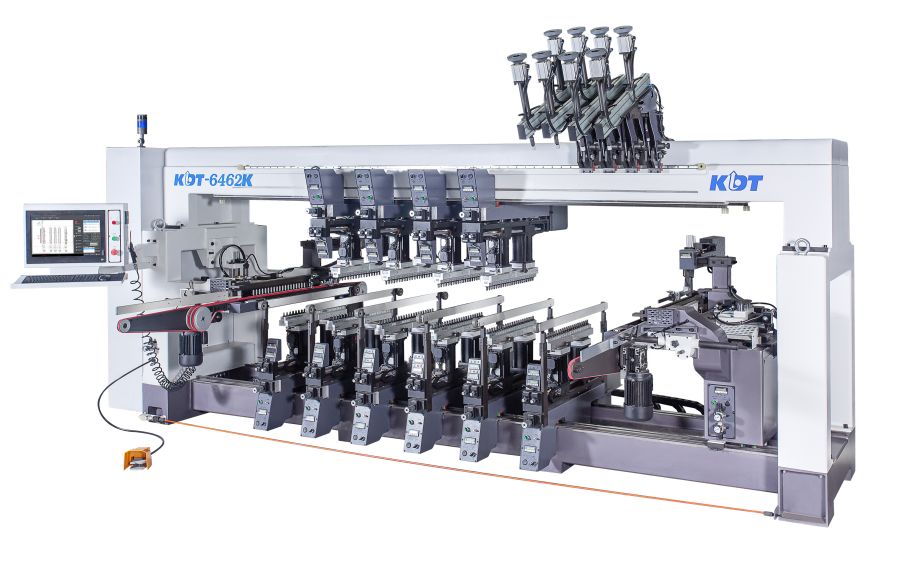
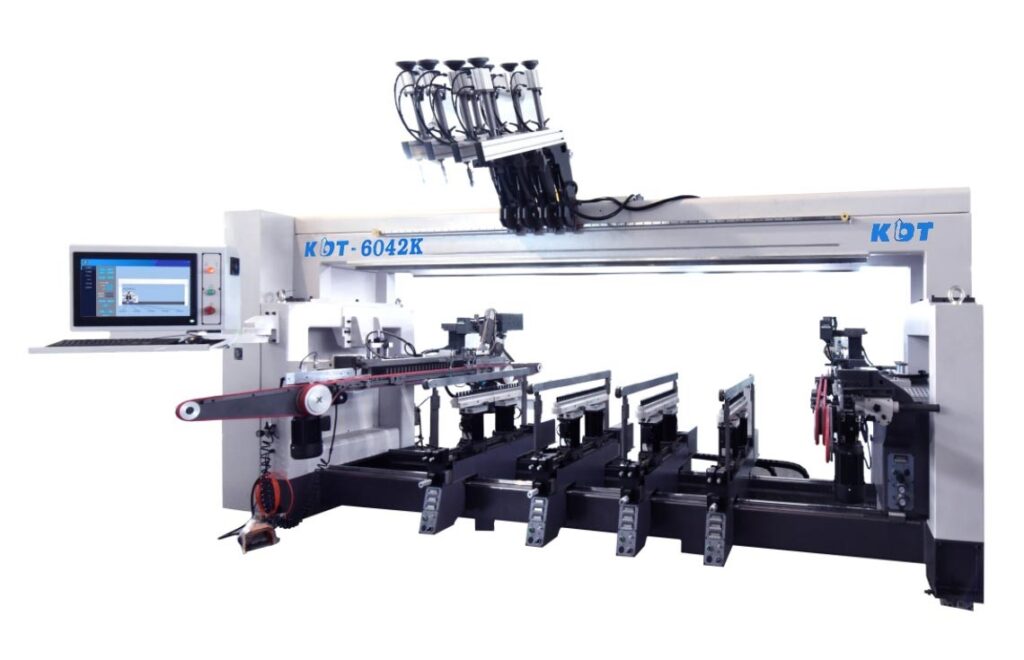
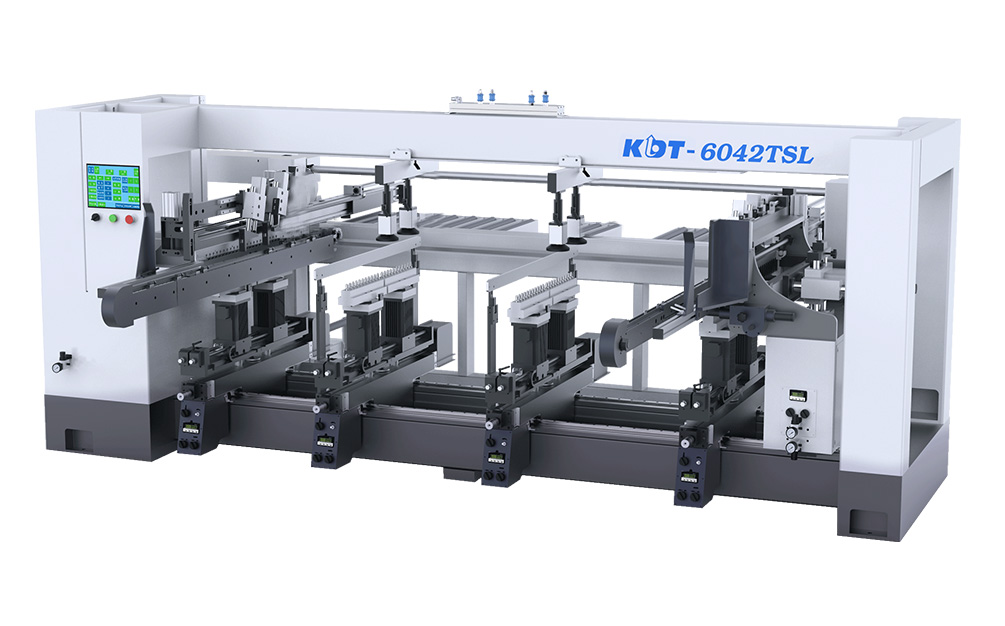
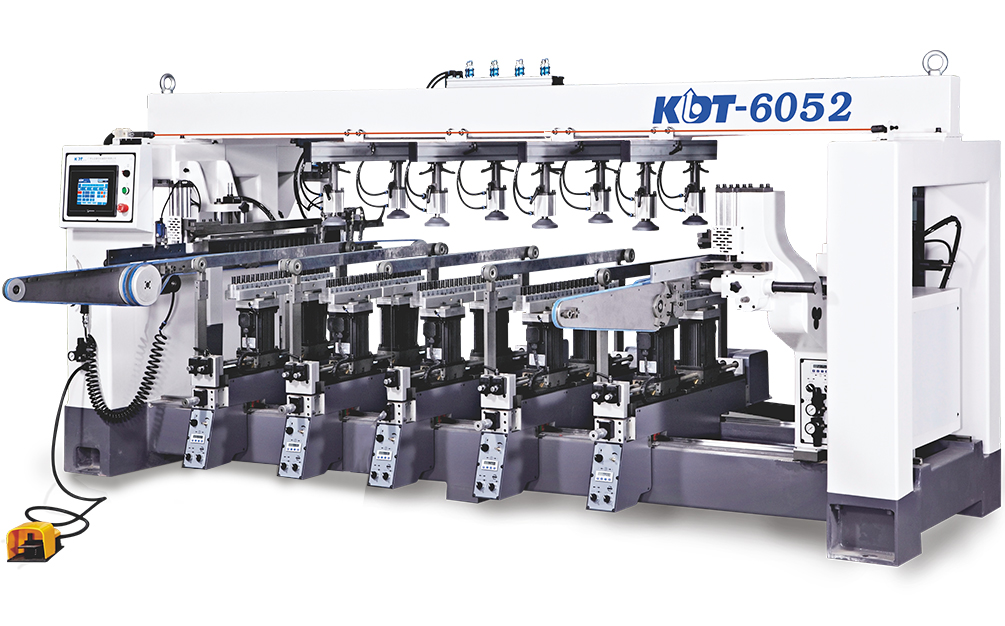
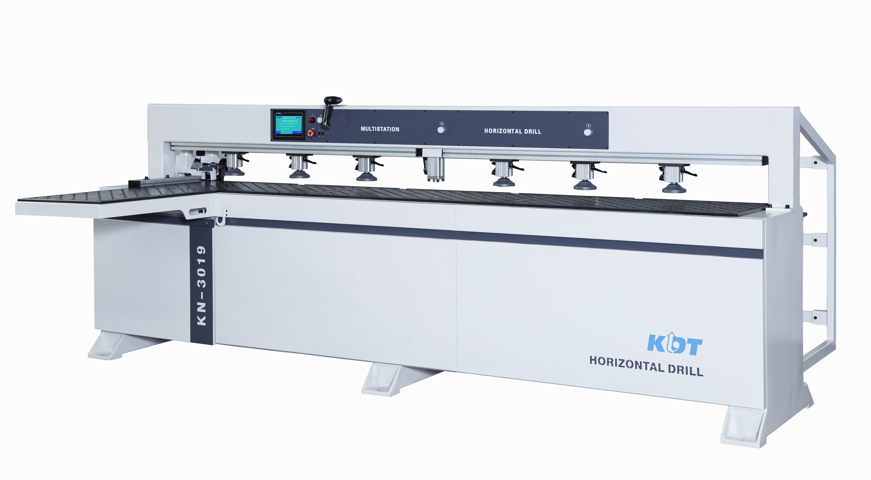
In furniture and wood manufacturing, every hole counts. A poorly executed bore can ruin a piece, slow down the assembly line or increase quality rejection rates. That's why machined drilling has gone from being an auxiliary tool to becoming the production hub of any competitive factory.
In this guide you'll find everything you need to know to understand the drilling process, compare the different types of machines available and make an informed purchasing decision, whether you're looking for your first CNC machine or want to modernise an existing production line.
What is machined drilling?
Machined drilling is the process by which a machine creates holes in a workpiece using rotating cutting tools, primarily drill bits, with speed, feed and depth parameters controlled in an automated manner.
Unlike manual drilling, where the operator regulates pressure and speed by eye, in industrial machining all these parameters are programmed or mechanically adjusted, which guarantees repeatability and consistent quality in production runs.
In the furniture industry, machined drilling is the operation that enables the creation of joining points, dowel channels, hardware housings and assembly holes that give structure to each piece.
Without it, mass production of panels, doors, drawers or furniture structures would be unfeasible at any minimally demanding production rate.
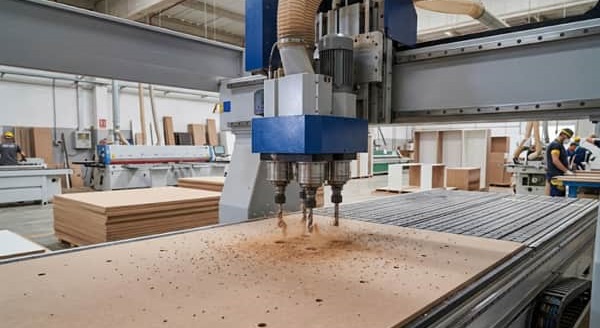
The practical difference between drilling by hand and doing so with a machined tool is not just about speed: it's about tolerance, internal hole finish and consistency between piece one and piece one thousand. A machined boring machine can work with tolerances of tenths of a millimetre continuously, something no manual process can guarantee.
The practical difference between drilling by hand and doing so with a machined tool is not just about speed: it's about tolerance, internal hole finish and consistency between piece one and piece one thousand. A machined boring machine can work with tolerances of tenths of a millimetre continuously, something no manual process can guarantee.
Drilling process: how it is executed step by step
Understanding the drilling process in detail helps to better select the machine, tools and working parameters. Broadly speaking, the operation follows these phases:
- Positioning and clamping of the workpiece. The wooden workpiece, MDF panel, chipboard or solid wood is fixed onto the work table using clamps, suction cups or mechanical stops. Incorrect positioning at this stage is the main cause of off-centre or out-of-tolerance holes.
- Tool selection and mounting. The appropriate drill bit is chosen for the type of hole and material. In CNC boring machines, tool changing can be automatic via an integrated drill bit magazine.
- Cutting parameter adjustment. The rotation speed (rpm), feed rate (mm/min) and target hole depth are programmed or selected. These three parameters determine the quality of the interior finish and the service life of the drill bit.
- Drilling execution. The drill bit rotates at high speed and penetrates the material in a controlled manner. During this phase, chip evacuation occurs, which is abundant in wood and wood-based materials and must be channelled correctly to avoid blocking the hole or damaging the cutting edge of the tool.
- Retraction and verification. The drill bit retracts, residual chips are extracted and the depth and diameter of the hole are checked. In automated production lines, this verification can be integrated using in-line dimensional control systems.
The chip formation is an indicator of the tool's condition and the correct choice of parameters. A long, continuous spiral chip usually indicates good cutting conditions; fine powder or irregular chips may indicate a worn drill bit or incorrect feed rate.
Regarding tools, the most common in wood drilling are twist drills with centre point, Forstner bits for flat-bottomed blind holes (typical in hinge cup housings) and spade bits for large diameters. Each geometry corresponds to a different type of hole and finish.
Drilling operations in the wood industry
Not all holes are the same. In furniture manufacturing and industrial joinery, different drilling operations are used depending on the final use of each hole. Understanding them allows correct sizing of the required machine and advance planning of tooling.
Through drilling
The hole passes through the workpiece from side to side. It is used for passing screws, pins or cables. It requires control of the exit speed to avoid splintering on the underside of the panel, especially in MDF or melamine.
Blind drilling
The hole has a specific depth and does not pass through the workpiece. It is the most common in the furniture industry: hinge cup housings, dowel holes, fitting recesses. Precise depth control is critical, as a hole that is too deep can weaken the workpiece or make the hole visible on the outer face.
Stepped drilling
Combines two or more diameters in the same hole, creating an internal step. It is used to house fastening elements with countersunk heads or to create screw seats with different tightening dimensions.
Multiple drilling
Several holes are executed simultaneously or sequentially in a single cycle. In the manufacture of shelving, drawer panels or wardrobe side panels, it is common to drill between 20 and 60 holes per workpiece in a single pass. This operation is the speciality of multi-spindle boring machines.
Dowelling
A specific operation in the furniture sector: pairs of aligned holes are drilled in two separate workpieces to insert wooden or plastic dowels that join them together. Dowelling requires perfect alignment between both holes, which makes specialised machines (dowel drilling and inserting machines) the most efficient option for this process.
Standard drilling and series boring
Standard drilling covers the execution of simple holes, one by one or in small batches, with manual or semi-automatic depth control. It is the starting point for many joinery workshops and the foundation upon which more advanced solutions are built.
In industrial production, the key is not just to drill one correct hole, but to drill it identically a thousand times in a row. Repeatability is the parameter that separates production machines from workshop tools.
Boring machines with mechanical depth stops and positioning guides already offer a level of consistency impossible to achieve by hand, but it is numerical control systems that elevate that repeatability to its highest expression.
In boring panels for shelving or serial furniture, for example, it is common to work with workpieces of standard dimensions where the position of each hole is defined to the millimetre. A well-trained operator can position and drill with acceptable precision during the first few hours,but fatigue and human variability become evident in long runs. The mechanised machine eliminates that variable.
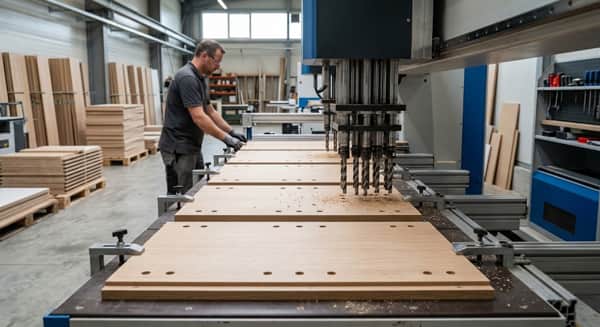
Multiple and multi-spindle boring
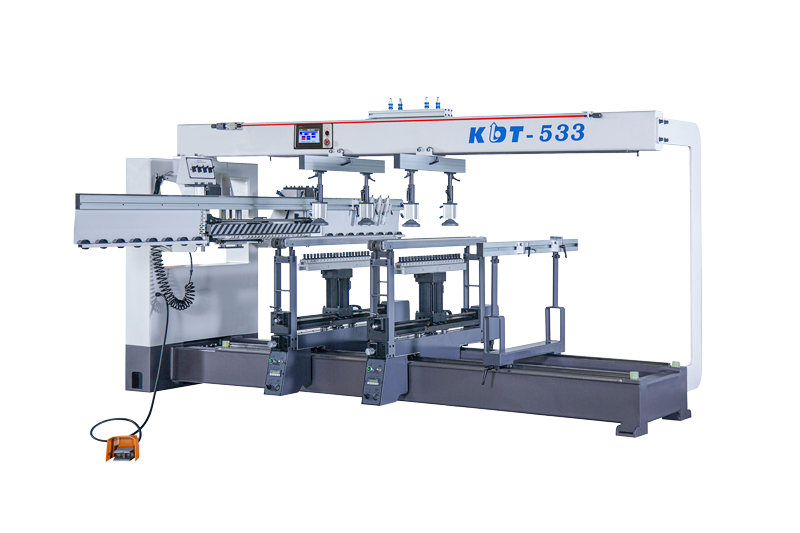
When production volume increases, drilling one hole at a time ceases to be viable. Multiple or multi-spindle boring machines solve this problem by executing several holes simultaneously thanks to a head with multiple spindles active at the same time.
In practice, this means that a workpiece requiring 40 holes and taking several minutes to process hole by hole can be completed in a single downstroke cycle of the head. The reduction in cycle times is drastic, and the impact on the line's production capacity is immediate.
Multi-spindle boring machines are especially efficient in:
- Manufacturing of cabinet side panels with complete series of shelf holes at fixed pitch (typically 32 mm).
- Boring of drawer bottoms and shelving boards in standard format.
- Drilling of doors and fronts with repetitive hardware positions.
The professional multi-spindle boring machine is the natural solution for factories with medium-high production of parts with repetitive geometry. Its strength is speed; its limitation, lower flexibility when dealing with reference changes or non-standard formats.
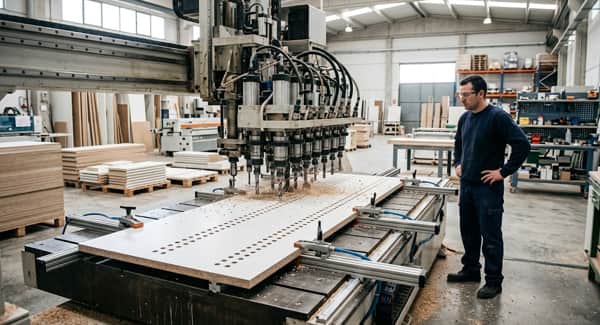
CNC Boring: precision and automation
CNC boring represents the highest level of automation within the boring process.
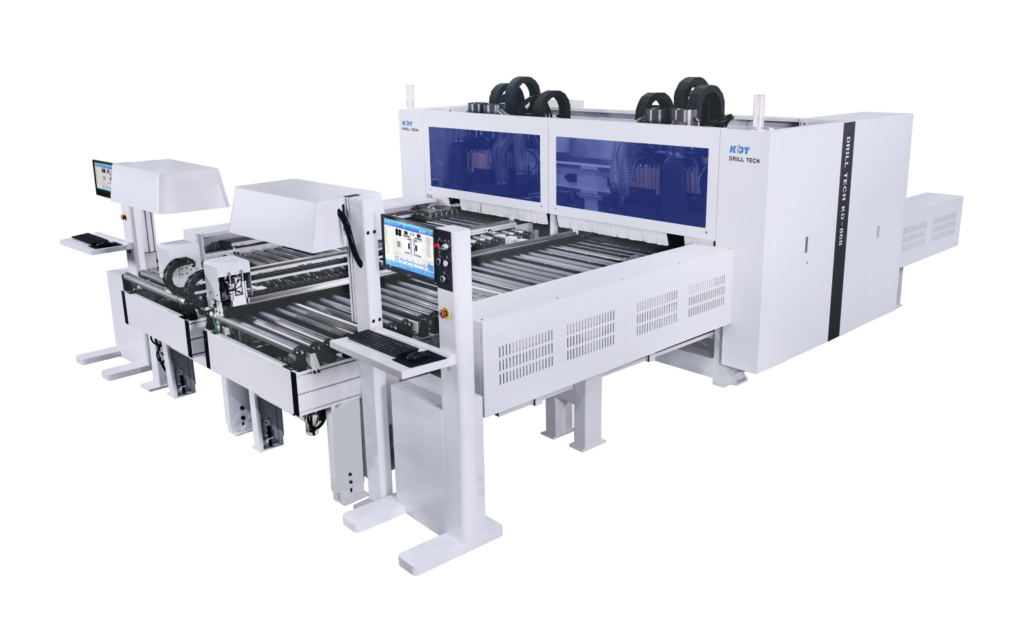
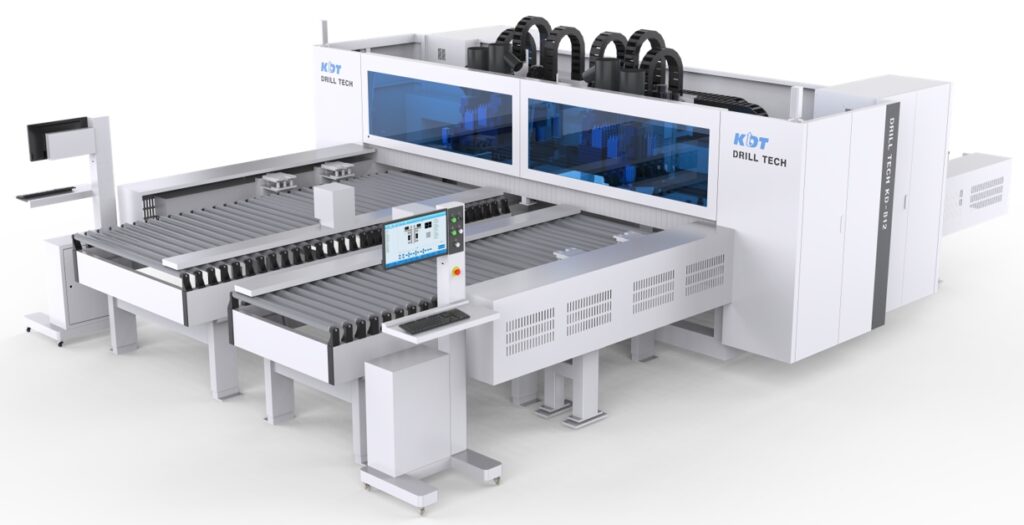
A numerically controlled machine receives a programme with the exact position, diameter, depth and execution order of each hole, and carries them out without manual intervention beyond loading and unloading of workpieces (or fully automatically in integrated lines).
The advantages of CNC boring over conventional solutions are several:
- Precision through programming: each hole is executed at the exact position defined in the programme, with tolerances of hundredths of a millimetre.
- Automatic tool change: modern CNC machining centres can change drill bits in seconds without stopping the cycle, allowing different diameters and depths to be combined on the same workpiece without repositioning.
- High cycle speed: CNC boring machine spindles work at high speed with controlled accelerations and decelerations, reducing non-productive time between holes.
- Absolute repeatability: the programme is always the same, so part 1 and part 10,000 are identical in hole position and finish.
- Reference flexibility: switching from one product reference to another is a matter of loading a new programme, without mechanically reconfiguring the machine.
The CNC wood drilling machines they are the investment that makes most sense when the factory works with a variety of references, non-standard formats or needs to integrate boring into an automated production line. If you want to explore the selection criteria in depth, you can consult our guide on how to choose a CNC boring machine for wood.
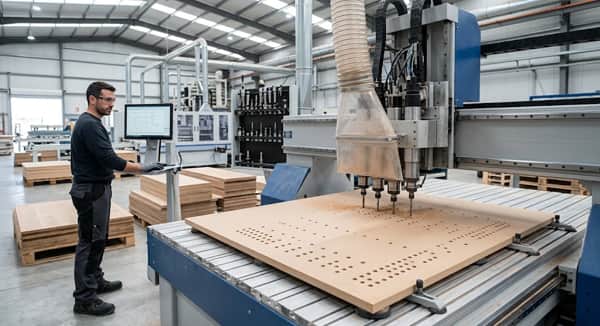
Types of mechanised boring machines: Which does your factory need?
The choice between a multi-spindle boring machine, a CNC boring machine or a dowel drilling and inserting machine depends on three main factors: production volume, variety of references and the type of operations that predominate in your process.
Below is a direct comparison to facilitate the decision:
A useful rule of thumb: if more than 70% of your production consists of repeated references with the same hole distribution, the multi-spindle boring machine pays for itself sooner. If you work with a variety of clients, bespoke dimensions or frequent reference changes, the CNC boring machine is the option that scales better with the business.
Multi-drill
- Ideal for long runs with repeated geometry.
- Multiple spindles active simultaneously: higher throughput per cycle.
- Fixed or semi-fixed configuration depending on the model.
- Lower initial investment compared to CNC.
- Optimum for: wardrobe panels, drawer bottoms, serial shelving.
Drill and pin drill
- Specialised in dowelling operations with alignment between two pieces.
- High precision in the relative positioning of holes.
- Essential in dowel-jointed assembly lines.
CNC Drilling
- Maximum flexibility and precision through numerical control.
- Reference changeover without mechanical reconfiguration.
- Allows combining diameters, depths and operations in a single cycle.
- Higher initial investment, with clear return in medium and high volumes with product variety.
- Optimal for: bespoke furniture, doors, mixed-reference manufacturing.
CNC machining centres
- They go beyond boring: they integrate milling, grooving and profile machining.
- The most complete option for factories seeking to concentrate operations in a single machine.
6 Advantages of CNC boring machines over traditional boring machines
The leap from conventional to CNC boring is not just technological: it has a direct impact on production figures and the bottom line. These are the most relevant advantages for a production or purchasing manager:
- Reduction of human error. In manual or semi-automatic boring, the hole position depends partly on the operator's skill and condition. In CNC, that variable disappears: the programme is the same every time.
- Faster cycle time. Modern CNC boring machines work with high-speed spindles and interpolated movements that minimise dead time between drillings. In a real production line, this can translate into doubling or tripling hourly capacity compared to a manual or semi-automatic process.
- Superior hole quality. Precise control of rotation speed, feed rate and depth guarantees a clean interior finish, without splinters, with the exact diameter and correct depth. In melamine-faced board or high-density MDF, this control is especially critical to avoid surface tear-out.
- Flexibility at no additional cost. Changing from one reference to another on a CNC boring machine means loading a new programme from the control panel or from the production management system. There is no need to change tools, recalibrate stops or reconfigure heads. That flexibility has enormous value in factories with a wide catalogue or made-to-order production.
- Integration into automated lines. CNC boring machines can be connected with automatic loading and unloading systems, with upstream or downstream machining centres, and with production management software (MES/ERP). That integration capability makes them the central node of any modern flexible line.
- Measurable return on investment. Cost per piece decreases as volume increases. With sufficient production, the price differential between a CNC boring machine and a conventional solution is recovered in periods that, depending on the sector and volume, typically range from one to three years.
Materials, tools and key parameters in wood boring
CNC boring represents the highest level of automation within the boring process.
A numerically controlled machine receives a programme with the exact position, diameter, depth and execution order of each hole, and carries them out without manual intervention beyond loading and unloading of workpieces (or fully automatically in integrated lines).
The advantages of CNC boring over conventional solutions are several:
- Precision through programming: each hole is executed at the exact position defined in the programme, with tolerances of hundredths of a millimetre.
- Automatic tool change: modern CNC machining centres can change drill bits in seconds without stopping the cycle, allowing different diameters and depths to be combined on the same workpiece without repositioning.
- High cycle speed: CNC boring machine spindles work at high speed with controlled accelerations and decelerations, reducing non-productive time between holes.
- Absolute repeatability: the programme is always the same, so part 1 and part 10,000 are identical in hole position and finish.
- Reference flexibility: switching from one product reference to another is a matter of loading a new programme, without mechanically reconfiguring the machine.
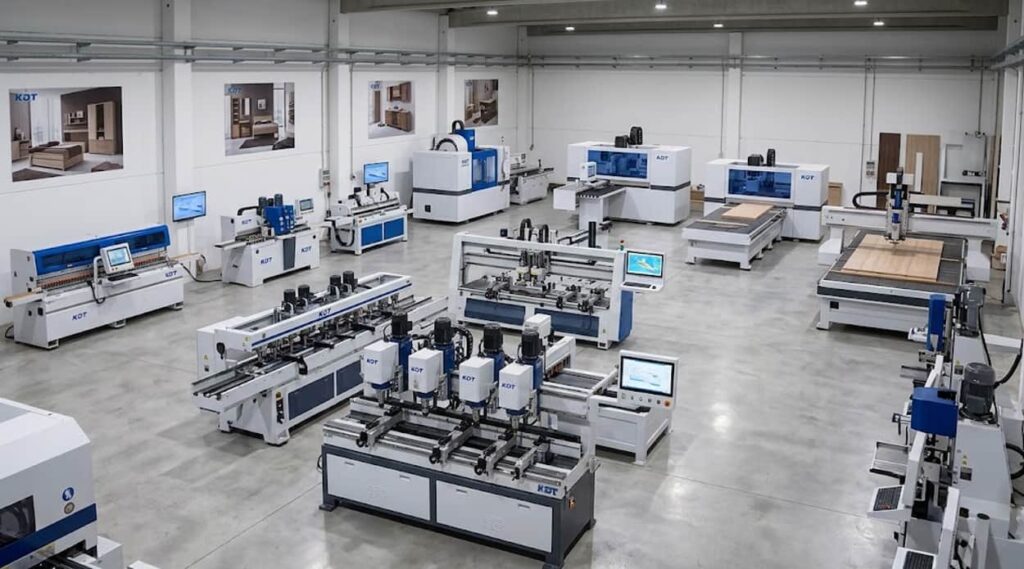
The CNC wood drilling machines they are the investment that makes most sense when the factory works with a variety of references, non-standard formats or needs to integrate boring into an automated production line. If you want to explore the selection criteria in depth, you can consult our guide on how to choose a CNC boring machine for wood.
KDT Ibérica Range of Boring Machines
At KDT Ibérica we work exclusively with machinery for the wood and furniture industry, and machined boring is one of our specialities.
Our range covers the three families of machines that any factory may need:
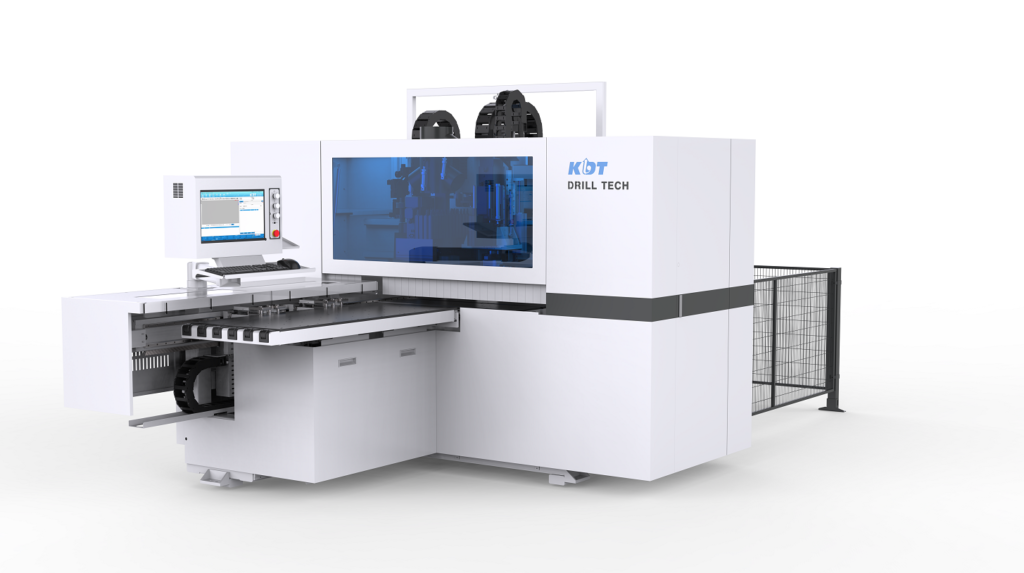
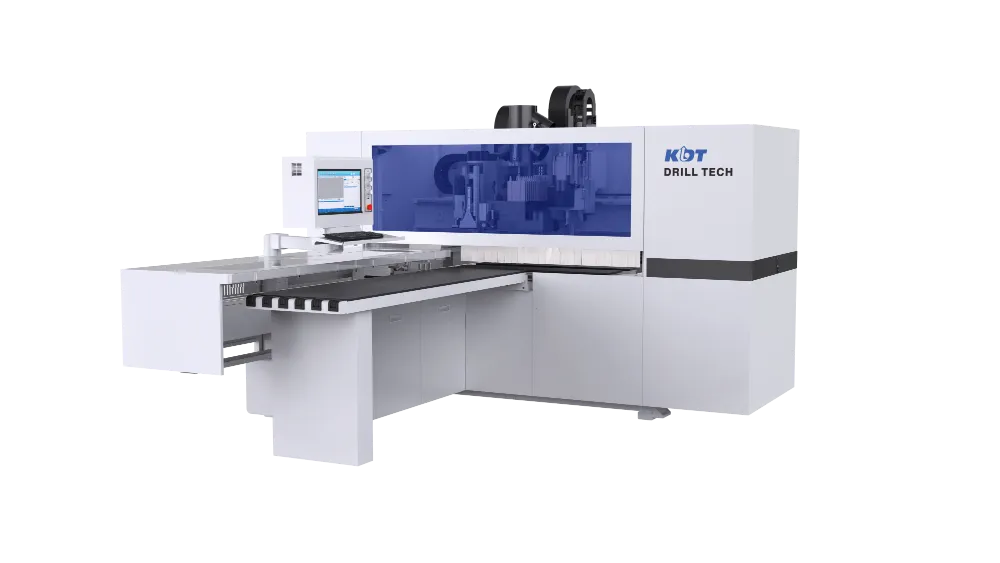
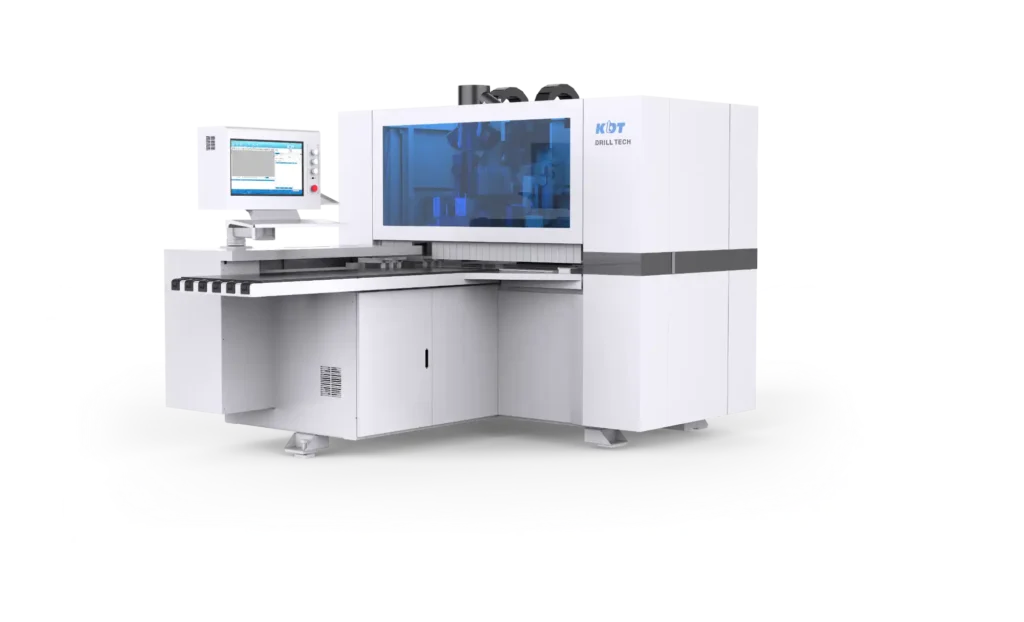
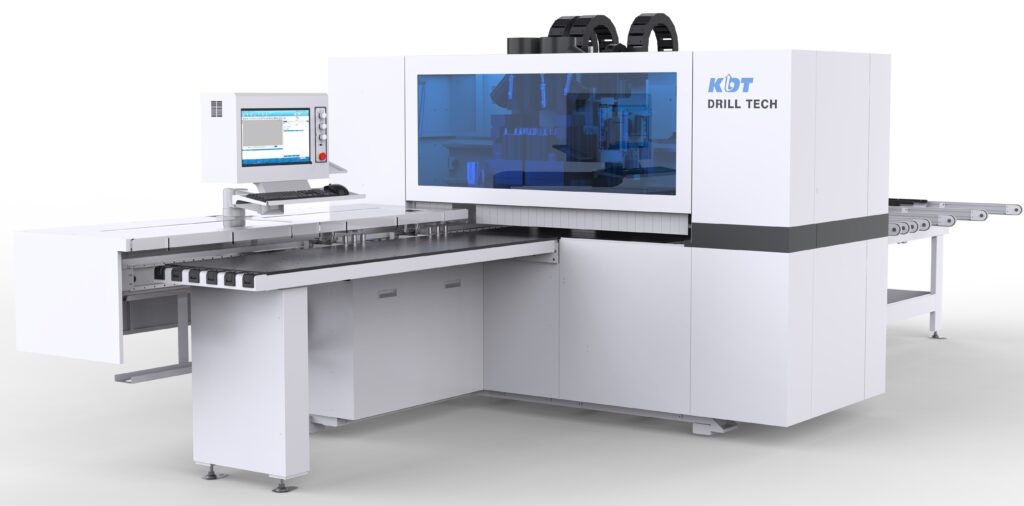
CNC boring machines. We have a wide range of CNC wood drilling machines, from single-head models for growing factories to high-throughput twin configurations for intensive production lines. All allow automatic tool change, high-speed operation and programming from standard design systems.
Multi-spindle boring machines. Our range of professional multi-spindle boring machines is designed for batch production of workpieces with repeated geometry: cabinet panels, backs, sides, doors. They are the highest-throughput solution for fixed references or those with minimal variation.
Dowel drilling and inserting machines. For dowelling operations with maximum alignment precision, we have specific equipment that guarantees coincidence between the two drillings, with the productivity required for medium and high-volume assembly lines.
Why work with KDT Ibérica?
- Physical showrooms where you can see the machines in operation before making any purchasing decision.
- In-house technical service: we do not depend on third parties for maintenance and after-sales support. Our technical team responds swiftly to any incident.
- Specialist advice: we help you identify the machine that best fits your volume, your references and your production space, without over- or under-sizing the investment.
- Complete catalogue of woodworking machinery: if in addition to boring you need solutions for machining centres, edge banding machines, beam saws or flexible lines, you will find everything from a single supplier.
If you want to know in detail the criteria for choosing between a CNC boring machine and a multi-spindle boring machine according to your specific situation, consult our guide how to choose a CNC boring machine for wood.
Frequently asked questions about CNC machining centres for wood and Nesting
What is the real difference between a CNC boring machine and a multi-spindle boring machine?
The multi-spindle boring machine executes several holes at once thanks to its multi-spindle head, which makes it very fast for repeated references.
The CNC boring machine, on the other hand, works through programming processes: it is slower for long runs of fixed geometry, but immensely more flexible when references change. If your factory has a wide catalogue or works to order, CNC is the option that scales best.
How often does a CNC boring machine require maintenance?
It depends on production volume and the material being worked, but as a general reference: drill bit inspection and head adjustment should be carried out weekly in intensive production.
Complete preventive maintenance of the machine (guide lubrication, spindle inspection, positioning calibration) is recommended every three to six months. Having our own after-sales service like KDT Ibérica's makes this much easier, because the technicians know the equipment in depth.
Can a CNC boring machine be integrated into a flexible production line?
Yes. Modern CNC boring machines are designed to communicate with production management systems and with automatic loading and unloading equipment.
Their integration into flexible CNC lines is one of the most common configurations in medium and high-volume furniture factories.
The key is that the boring machine can receive the work order (with the parameters for each workpiece) directly from the management system, without the operator having to enter data manually.
What budget do I need to acquire a CNC boring machine?
The range is broad: an entry-level multi-spindle boring machine has a significantly lower cost than a high-performance CNC boring machine.
The most important thing is not the price of the machine itself, but the cost per piece it allows you to achieve and the return on investment based on your production volume. At KDT Ibérica we analyse these parameters with you before making any recommendation.
Do KDT CNC boring machines work with all types of wood and board?
Yes. Our range is designed for the most common materials in the furniture industry: MDF, chipboard, melamine, plywood, solid wood and their combinations.
The selection of drill bits and cutting parameters are adapted to each material to guarantee hole quality in all cases.
Ready to take the next step in your production line? Request your personalised quote without obligation or browse our complete catalogue of CNC boring machines. Our technical team is available to advise you and help you find the machine that best suits your production needs.
 Spanish
 Portuguese
 English